 Karmandir
About
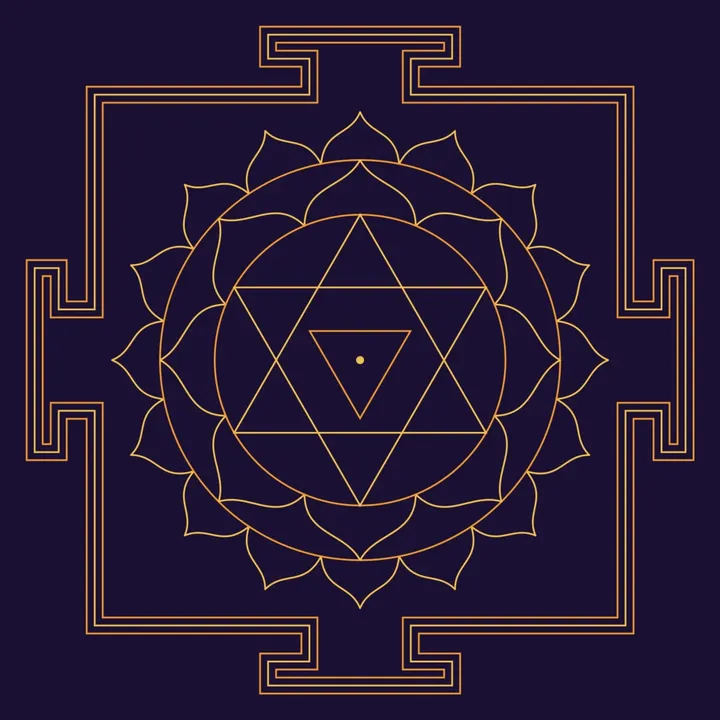
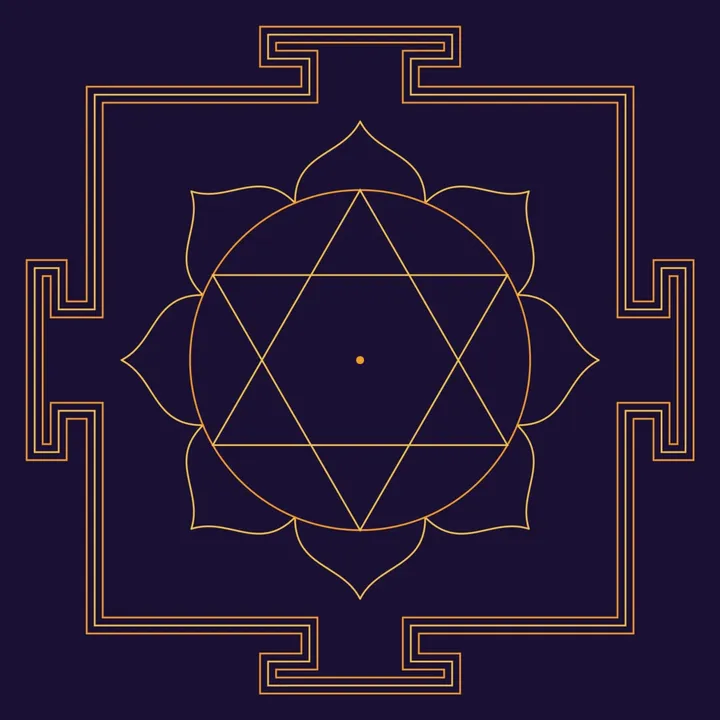
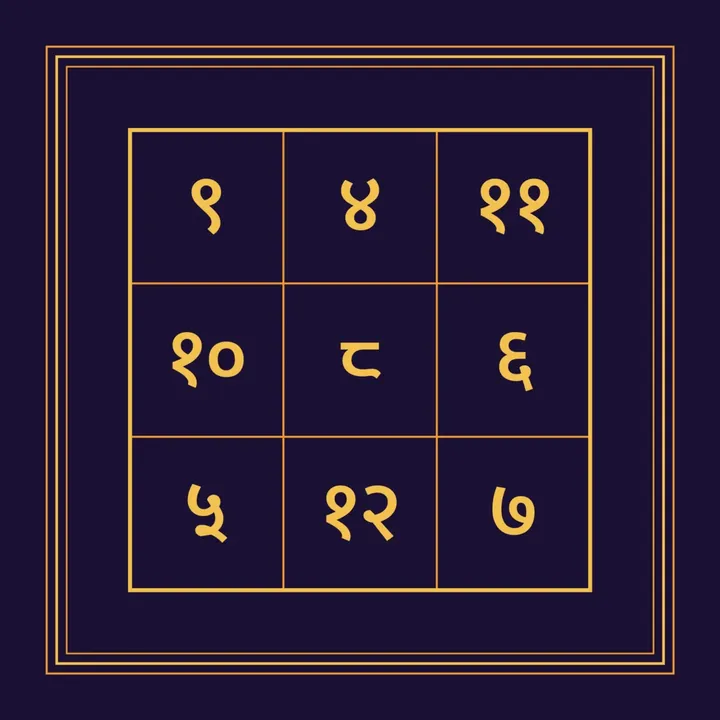
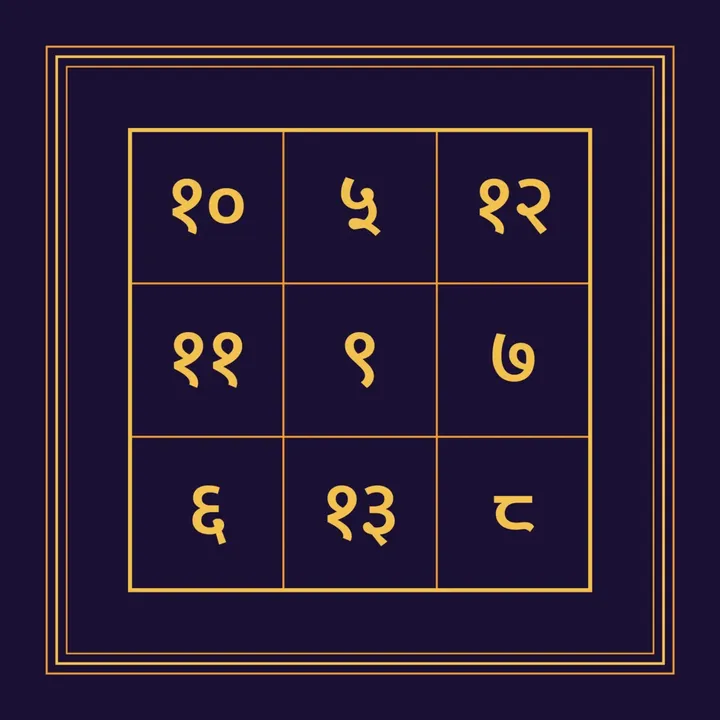
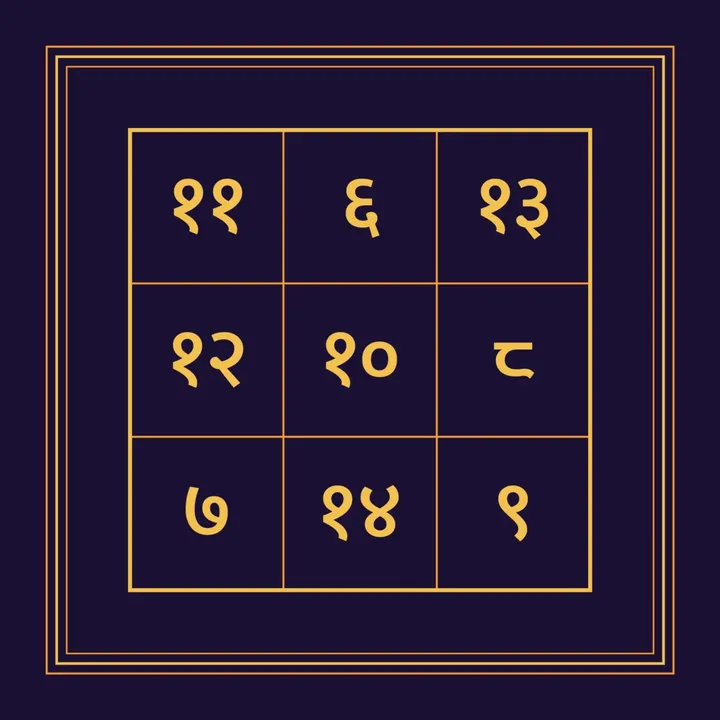
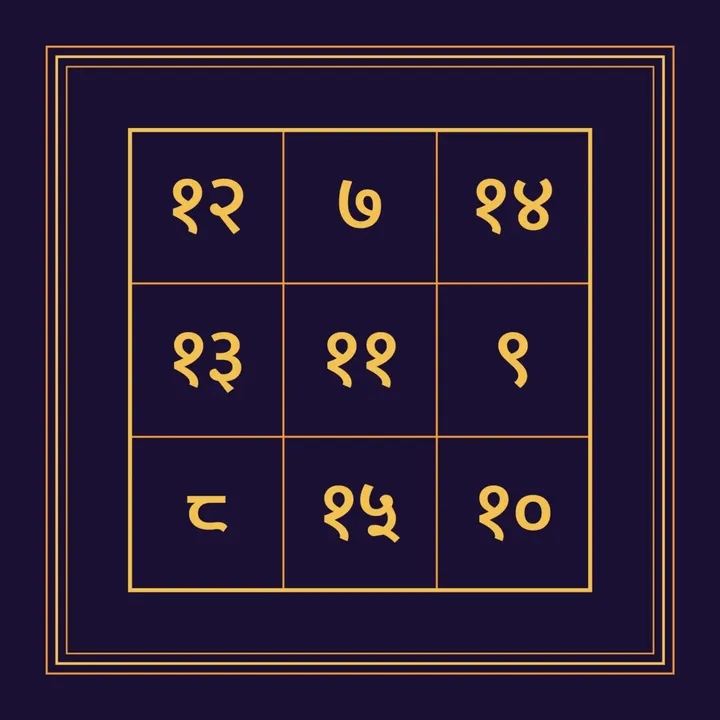
The Baglamukhi Yantra is the yantra of Maa Baglamukhi, one of the ten Mahavidyas, who is also called Pitambara, the Devi dressed in yellow. Her best-known temples are Pitambara Peeth at Datia and the temple at Nalkheda, both in Madhya Pradesh, and the temple at Bankhandi in Kangra district, Himachal Pradesh. In her yantra the central dot sits inside a small downward triangle; around it come a six-pointed star, a circle, a lotus of eight petals, another circle, a lotus of sixteen petals and a square frame with four gates. Devotees keep it in the puja place as an aid to remembering the Mother with faith and a quiet mind.
Parts of the yantra
Bindu: the dot at the centre, the seat of the Devi. Trikona: the small downward triangle around the bindu, a common sign of Shakti. Shatkona: two crossing triangles forming a six-pointed star whose points touch the inner circle. Two circles with a lotus of eight petals between them, and a lotus of sixteen petals outside; each lotus has one petal pointing straight up. Bhupura: the outer square of three lines with a gate on each side, the edge of the sacred space. The Narada Purana gives the same order for her puja: a triangle, then figures of six, eight and sixteen parts, and the square outside. In her worship, the cloth, flowers and offerings are yellow.
How to use it
Keep the yantra upright as drawn, with the small triangle pointing down, on a clean yellow cloth in the puja place. Light a ghee diya and offer yellow flowers, a pinch of haldi and a yellow sweet such as besan laddoo. Sit facing it, breathe slowly, rest your gaze on the bindu, then let it move out through the star and the petals to the gates and back. Softly take the Mother's name with devotion and pray for a calm mind and a pure heart. Her full mantra-sadhana is tantric and is learnt only from a guru; it is not given here.
ॐ बगलायै नमः
Om Bagalayai Namah →
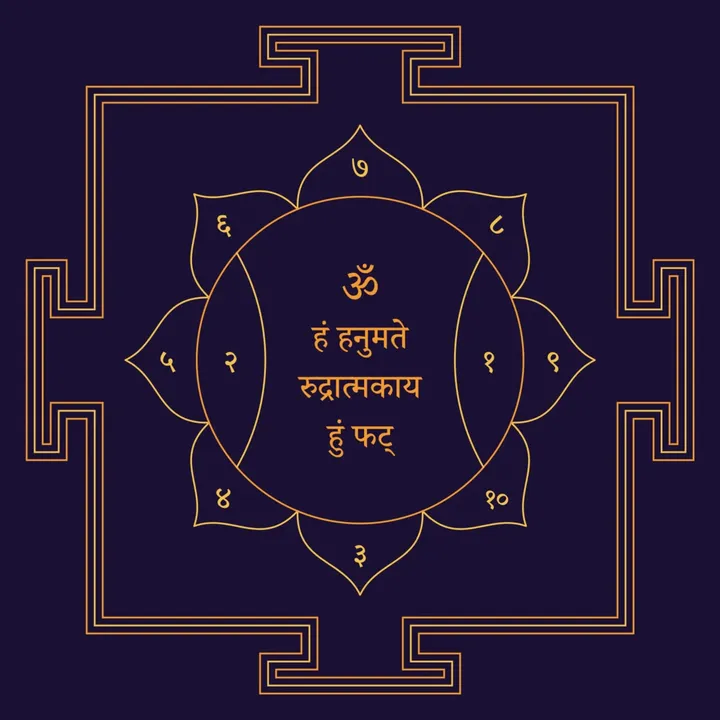
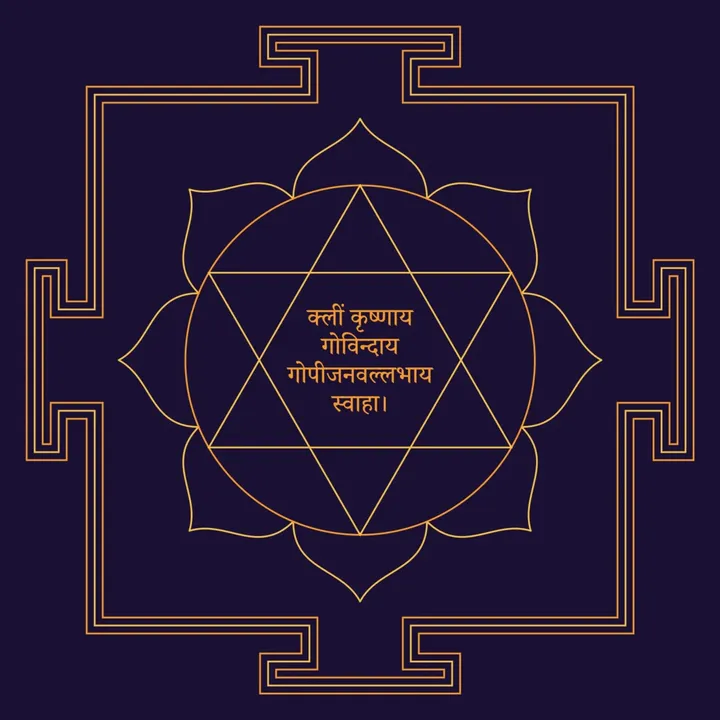
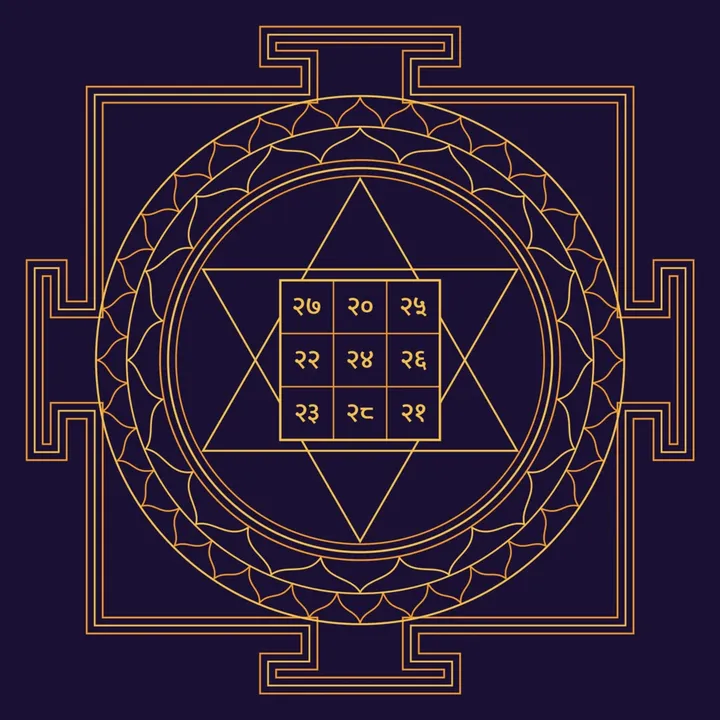
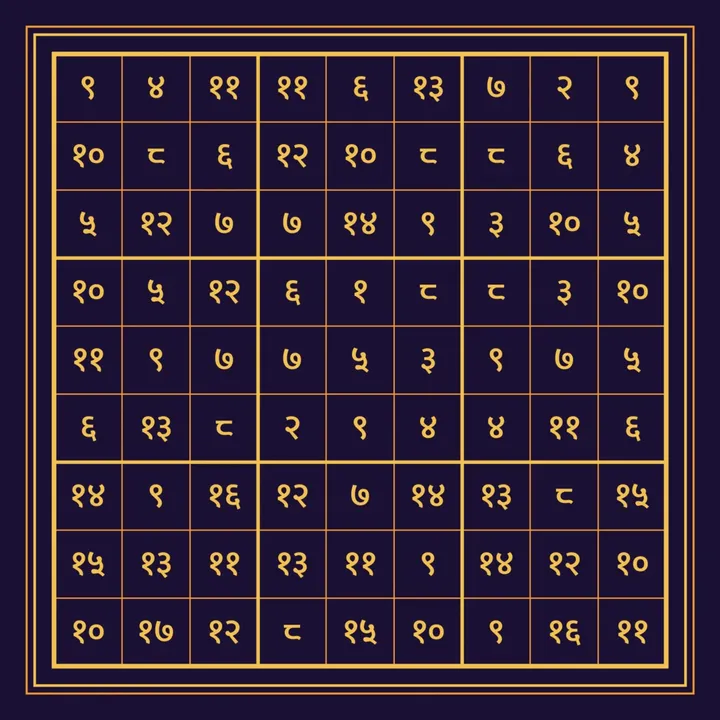
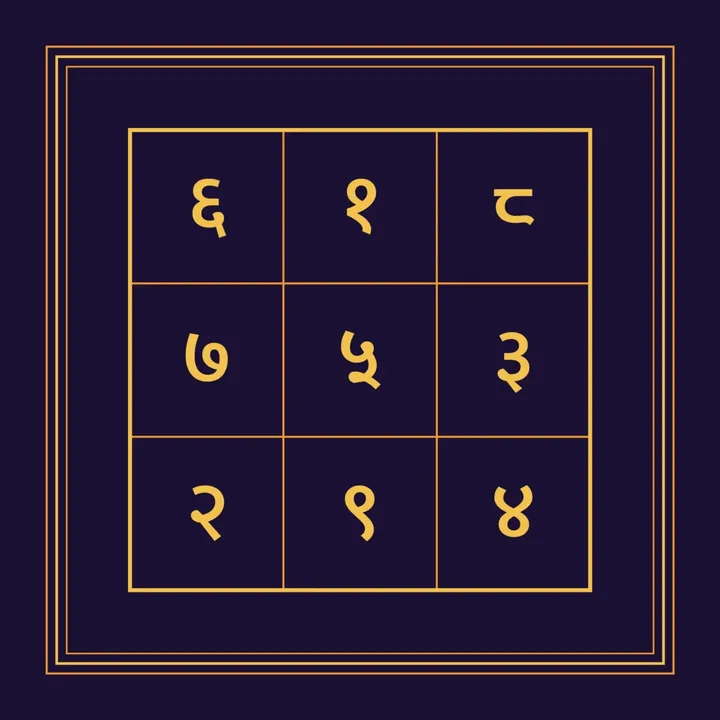
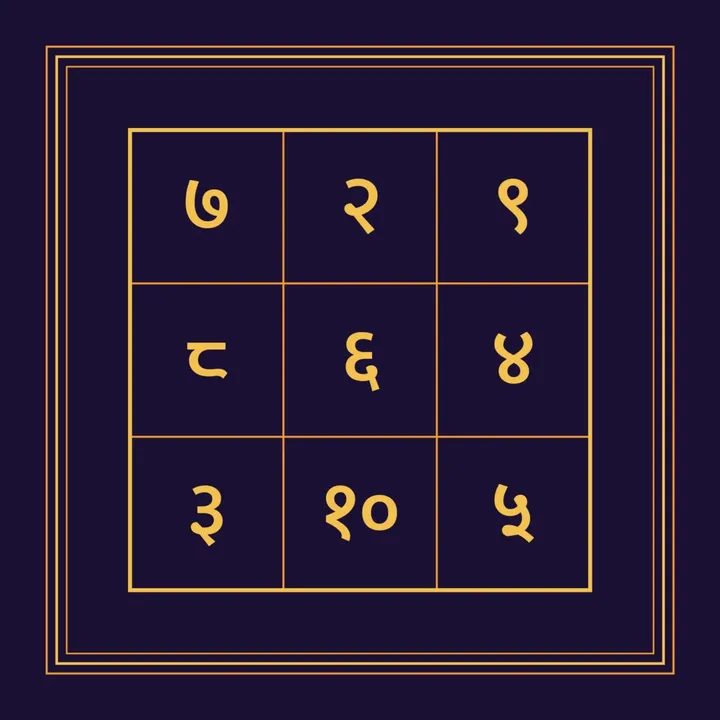
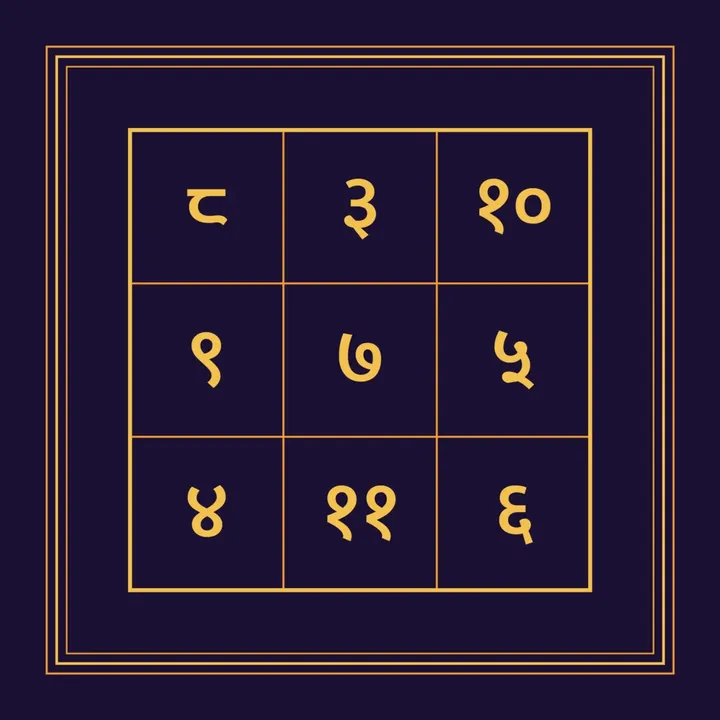
Metal plates often print a mantra and other words around the border, and some fill the petals with letters; this drawing keeps only the lines and the bindu. Some printed drawings, such as Drik Panchang's, have two rings of eight petals inside the sixteen. The number of lines in the outer square also differs from plate to plate.
Yantras
Sources
- drikpanchang.com/vedic-mantra/goddesses/parvati/mahavidya/mahavidya-ya…
- static.drikp.com/images/yantra/goddesses/mahavidya/bagalamukhi/400x400…
- rudraksha-ratna.com/buy/baglamukhi-yantra
- prabhatkhabar.com/religion/baglamukhi-jayanti-2026-temples-nalkheda-da…
- en.wikipedia.org/wiki/Bagalamukhi_Temple,_Himachal_Pradesh