 Karmandir
About
Surya Dev is the devta everyone can see with their own eyes every day, which is why he is called the 'pratyaksh devta', the visible god. His light and warmth keep life going on earth, and he makes day and night. He is the son of Mother Aditi and Kashyap rishi, so he is called 'Aditya'. He is counted first among the nine grahas, and Sunday is his day. Many people offer water (arghya) to the rising sun every morning. Makar Sankranti, Ratha Saptami and Chhath are his great festivals, and the Gayatri mantra is also a prayer to Savita, the Sun.
The story
In the Valmiki Ramayan (Yuddha Kand, sarga 105) there is a moment when Shri Ram stands tired and worried after a long battle, and Ravan comes before him again, ready to fight. Just then the great sage Agastya, who had come with the devas to watch the battle, walks up to Ram.
'Ram, mighty-armed Ram,' he says, 'listen to an old and secret hymn. It is called Aditya Hridayam.' The sage says it calms worry and sorrow. Then Agastya sings the glory of Surya Dev: he lives within all the devas, he stays awake even in sleeping beings, and he is the giver of heat, rain and life. He tells Ram to recite the hymn three times with a steady mind. Having said this, the sage leaves the way he came.
Ram listens closely and keeps every word in his heart. His sorrow leaves him. He sips water three times to purify himself, looks towards the sun and recites the hymn. A great joy fills him. He picks up his bow and goes forward towards Ravan with full resolve. The epic says that Surya Dev, standing among the devas, looked at Ram with delight and called out, 'Hurry!' To this day many devotees recite the Aditya Hridayam in the morning, facing the rising sun.
How they are shown
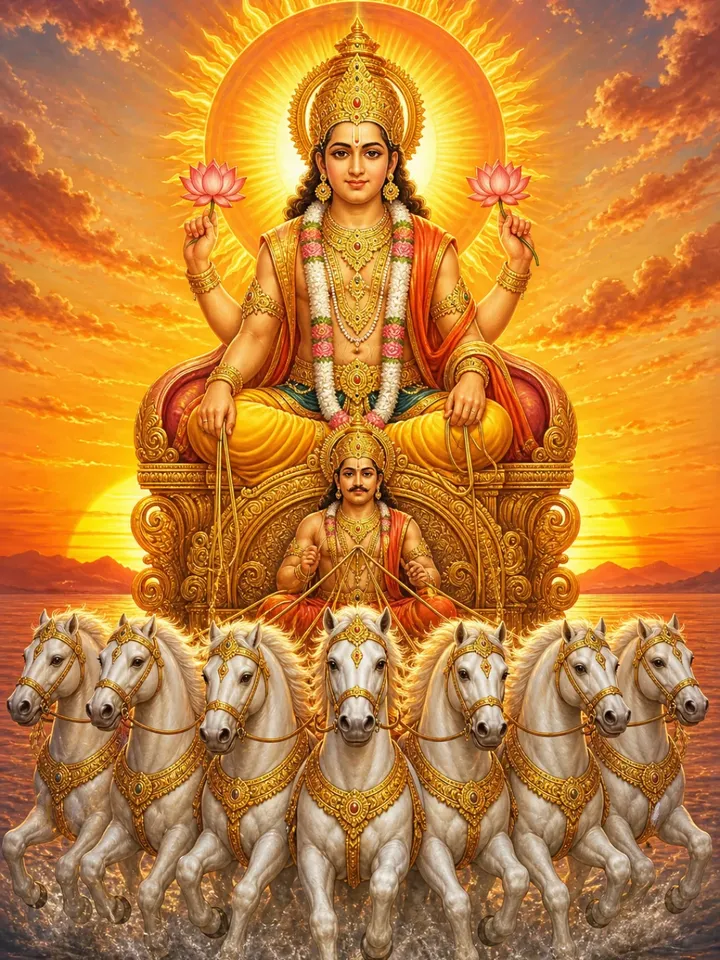
Surya Dev shines with a golden glow. He holds a lotus in each hand, the flower that opens in sunlight. He wears a crown and earrings and rides a chariot drawn by seven horses, which are linked with the seven colours of light and the seven days of the week. His charioteer is Aruna, the red glow of dawn. In some murtis the dawn goddesses Usha and Pratyusha stand on either side of him, shooting arrows at the darkness.
How to worship
Sunday
Jaggery (gud), red flowers and red sandal; roli and rice grains in the arghya water; on Chhath, thekua made of wheat flour and jaggery, and seasonal fruit
Wake early, bathe and stand facing the rising sun in the east. Fill a copper lota with water and add a little roli or red sandal, a red flower and a few rice grains. Pour the water slowly in a thin stream with both hands as you say 'Om Ghrini Suryaya Namah'. Do not stare straight at the sun; look at the stream of water or at the ground. Then fold your hands and bow. On Sundays you may read the Aditya Hridayam or sing the aarti 'Om Jai Surya Bhagwan'.
Their festivals
- Makar Sankranti The day the sun enters Makar (Capricorn), usually 14 or 15 January
- Ratha Saptami Magh Shukla Saptami
- Chhath Puja (Sandhya Arghya) Kartik Shukla Shashthi
- Chaiti Chhath Chaitra Shukla Shashthi
Aarti, chalisa and katha
Temples and tirth
Yantras
Sources
- en.wikipedia.org/wiki/Surya
- hi.wikipedia.org/wiki/सूर्य_देवता
- valmikiramayan.net/utf8/yuddha/sarga105/yuddhasans105.htm
- en.wikipedia.org/wiki/Ādityahṛdayam
- en.wikipedia.org/wiki/Ratha_Saptami
- en.wikipedia.org/wiki/Chhath
- hi.wikipedia.org/wiki/छठ_पूजा
- en.wikipedia.org/wiki/Makar_Sankranti
- amarujala.com/spirituality/religion/surya-ko-jal-kaise-de-surya-ko-arg…
- navbharatlive.com/lifestyle/be-sure-to-keep-these-things-in-mind-while…