 Karmandir
About
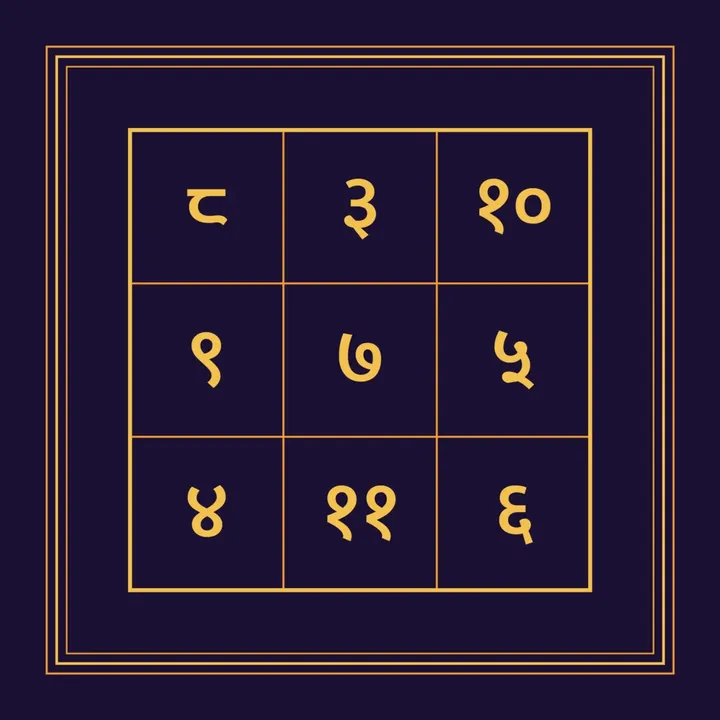
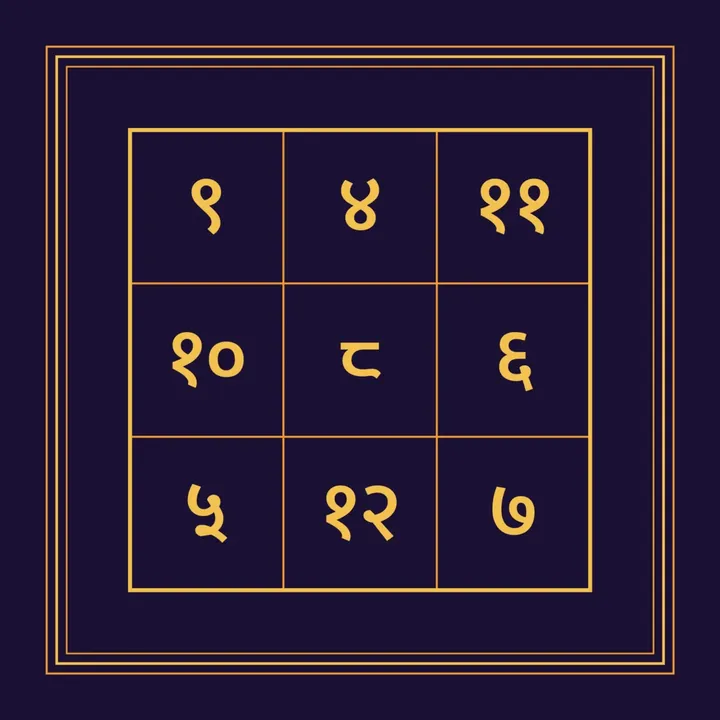
The Budh Yantra is the number yantra of Budh dev, the son of Chandra, whom tradition links with learning, speech and good sense. Its nine numbers run from 4 to 12, the Surya square with 3 added to each, so every row, every column and both diagonals add up to 24, with 8 in the middle. In the full Navagraha Yantra, Budh's square sits in the north-east corner, as the Matsya Purana says. Families keep it in the puja place and remember Budh dev on Wednesdays with his verse from the Navagraha Stotram, which calls him gentle and matchless in looks.
Parts of the yantra
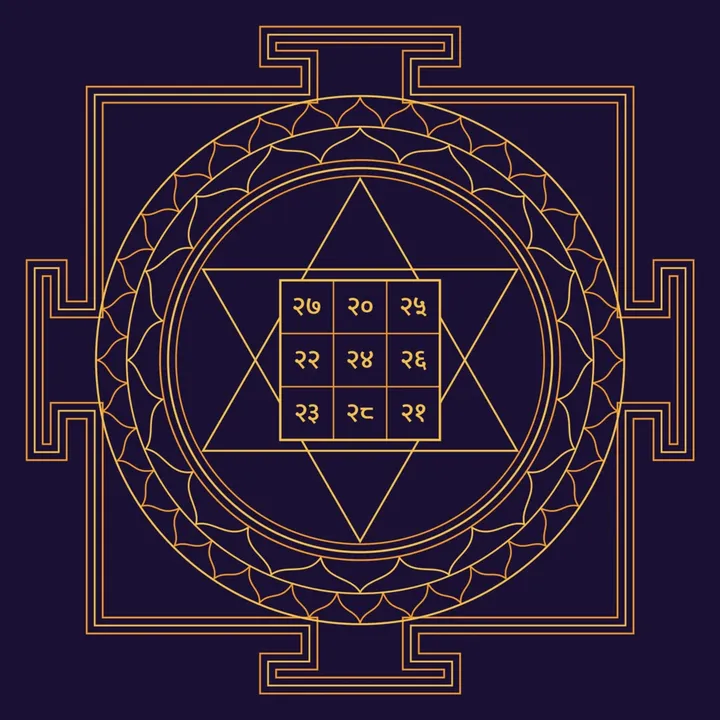
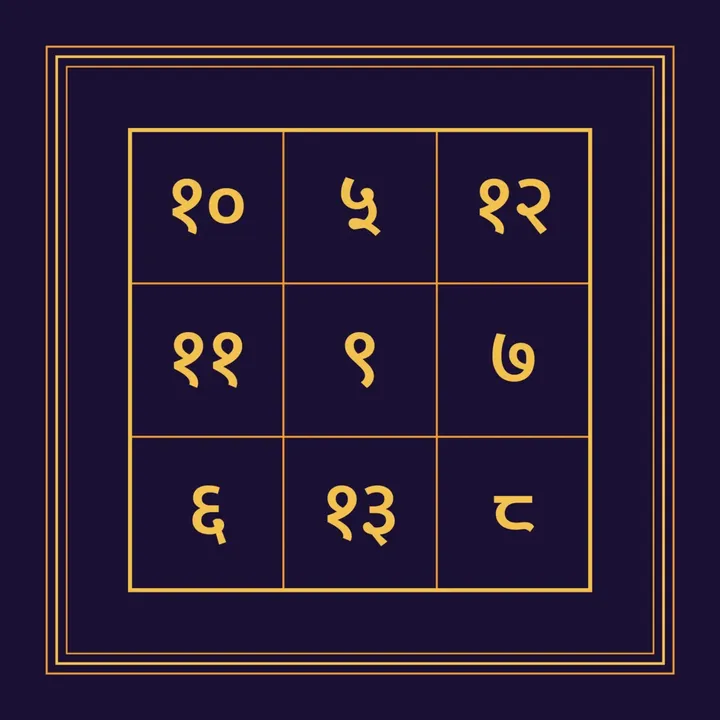
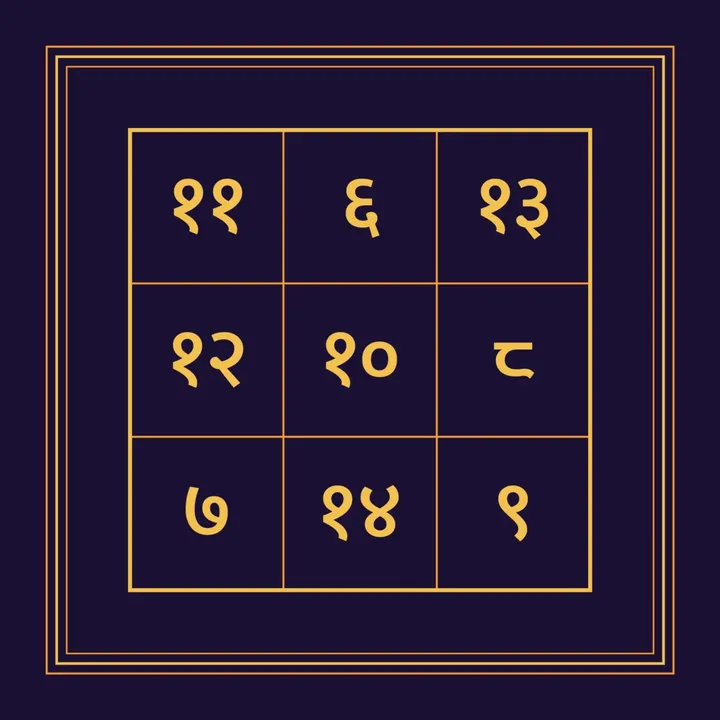
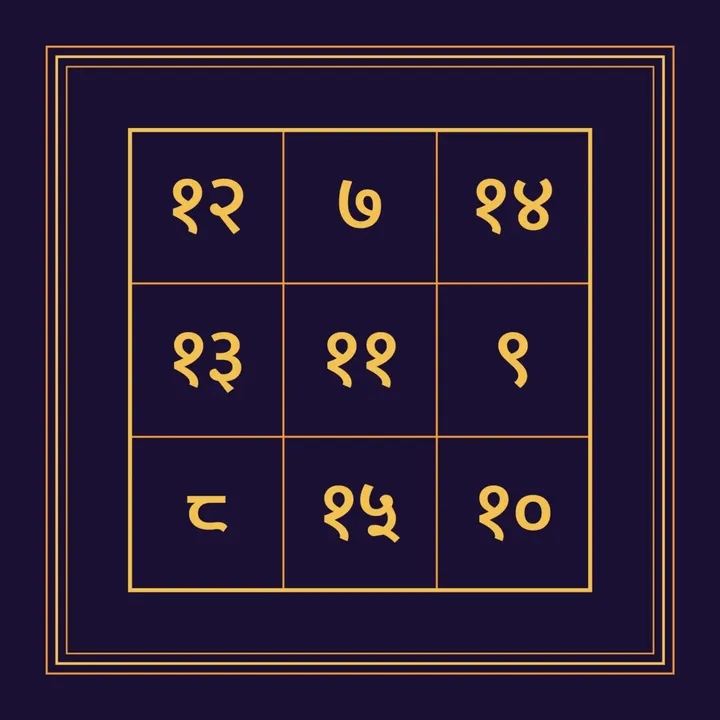
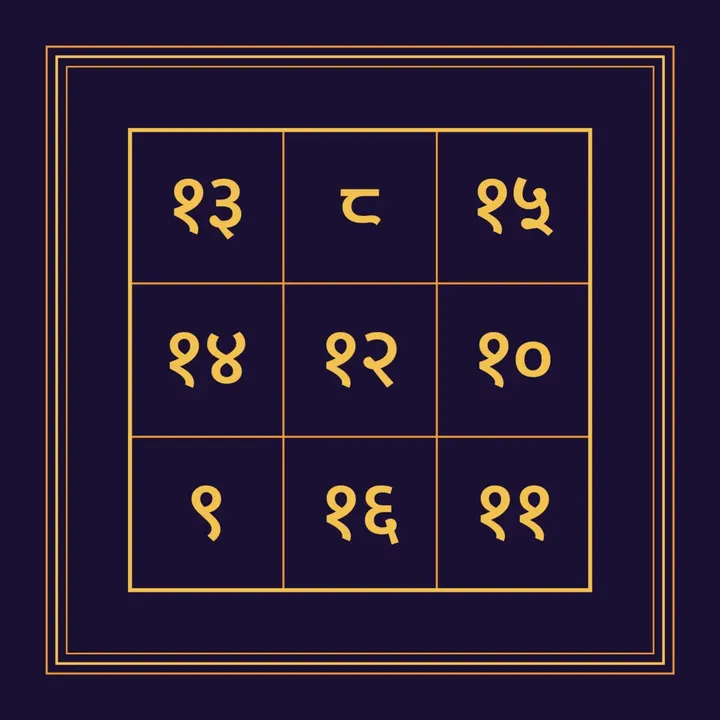
Number square: nine cells, written in Devanagari digits in the drawing — top row 9, 4, 11; middle row 10, 8, 6; bottom row 5, 12, 7. Every row, column and diagonal totals 24, and 8 sits in the middle cell. Any two numbers facing each other across the middle always add up to 16. Lines: a gold outer line closes the square and saffron lines divide it into nine cells. Frame: a plain border of three lines around the square, marking the yantra's space.
How to use it
Place the yantra upright on a clean cloth in the puja place. On a Wednesday, or on any day, light a diya, offer a flower and sit quietly facing it. Rest your eyes first on the middle number, 8, then move them through the numbers from 4 up to 12, one cell at a time; this gives the mind one calm thing to follow. Then read Budh dev's verse from the Navagraha Stotram (प्रियङ्गुकलिकाश्यामं…) once, or 11 times. Wipe the yantra with a soft, dry cloth to keep it clean.
प्रियङ्गुकलिकाश्यामं रूपेणाप्रतिमं बुधम्। सौम्यं सौम्यगुणोपेतं तं बुधं प्रणमाम्यहम्॥
Priyangu Kalika Shyamam Rupenapratimam Budham. →
Frames differ from print to print: the NCERT figure, for example, draws this square with an arrow passing behind it. Many prints use the digits 1, 2, 3 instead of the Devanagari digits used here. The numbers and their places stay the same.