 Karmandir
About
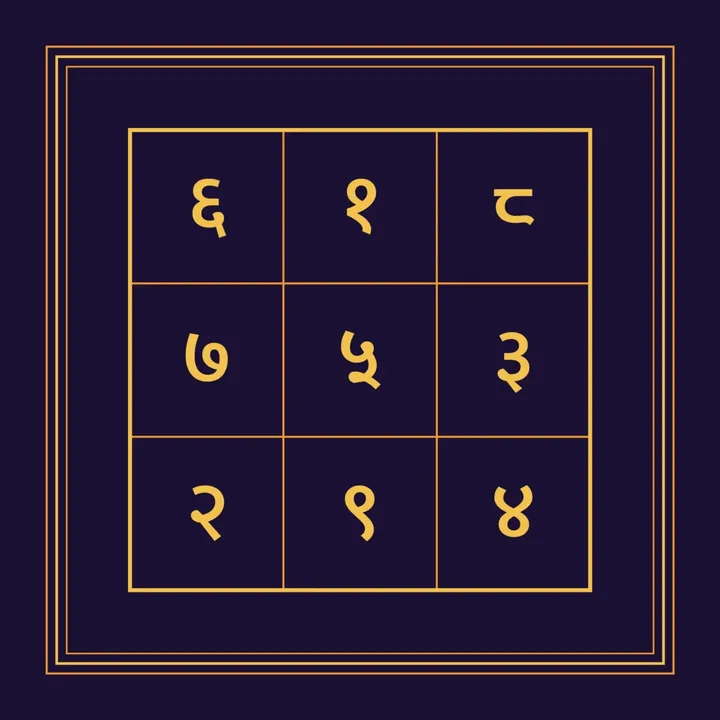
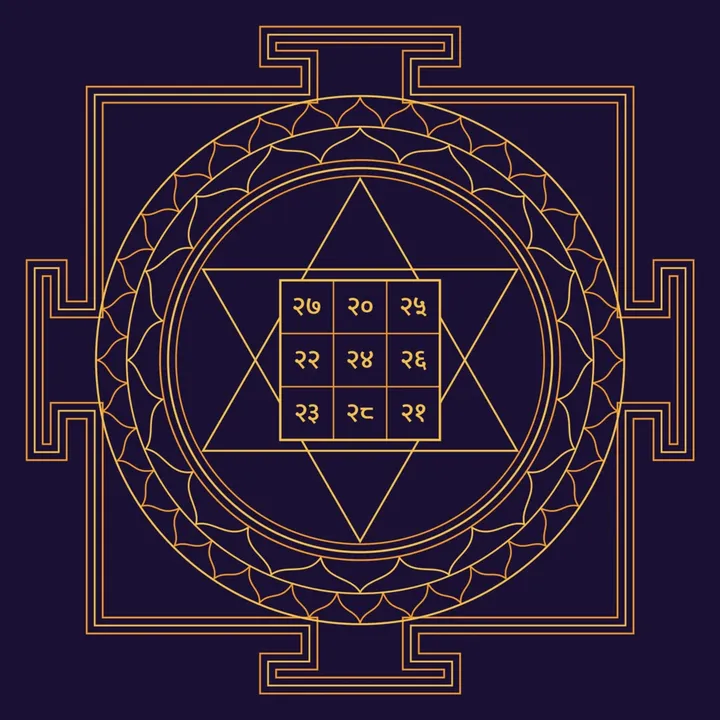
The Kuber Yantra is linked with Kuber ji, the treasurer of the devtas, king of the yakshas and guardian of the north. At its heart is a 3×3 square of the numbers 20 to 28, arranged so that every row, column and diagonal adds up to 72. In many South Indian homes the same square is drawn on the floor with rice flour as the Kubera kolam. Many families worship Kuber ji along with Lakshmi ji on Dhanteras and Diwali, and keep this yantra in the puja place as a reminder to look after the home's wealth with care and honesty. The NCERT maths book Ganita Prakash also shows it as an example of an Indian magic square.
Parts of the yantra
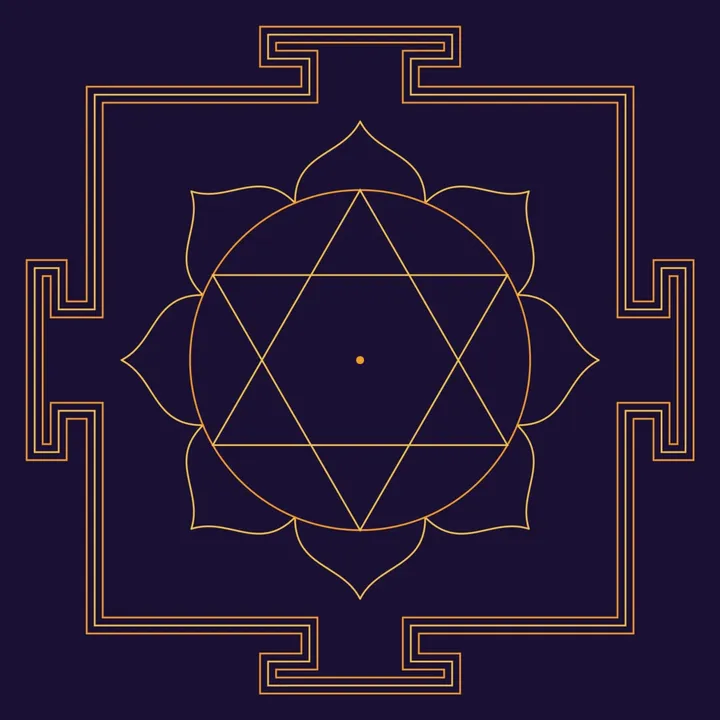
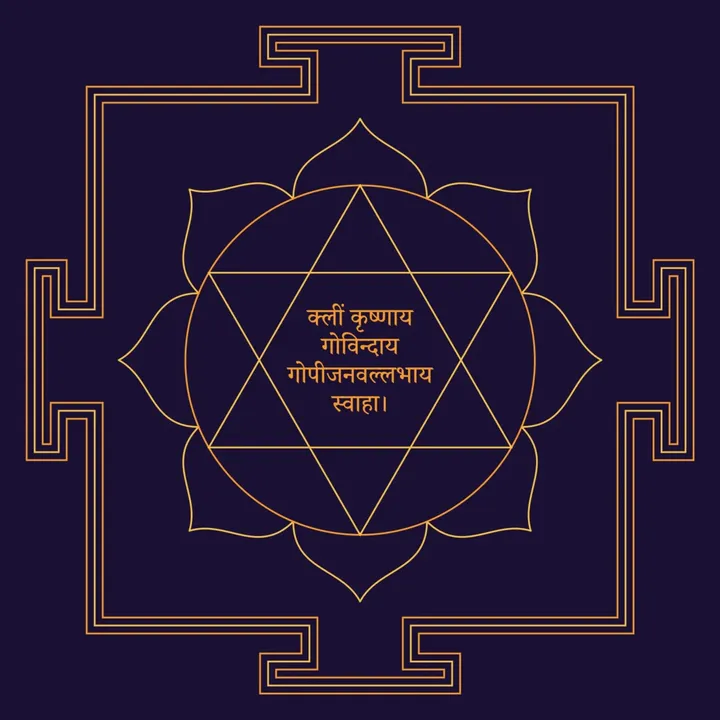
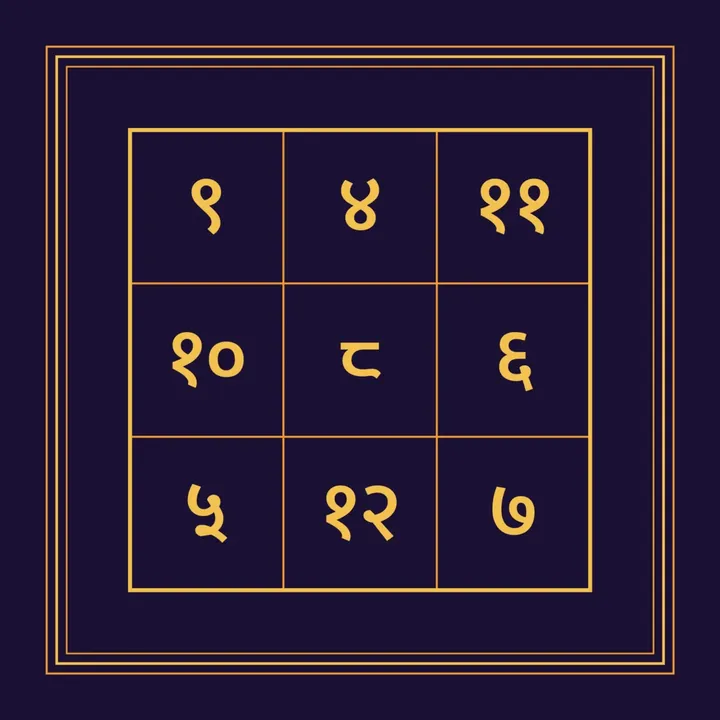
Number square (centre): nine cells with the numbers 20 to 28, written in Devanagari digits in the drawing — top row 27, 20, 25; middle row 22, 24, 26; bottom row 23, 28, 21. Every line of three adds up to 72, and 24 sits in the middle cell. Shatkona: a six-pointed star of two crossing triangles behind the square. Circles: three close rings around the star, and an outer circle holding the lotus. Lotus: an inner ring of 16 petals and an outer ring of 32 petals. Bhupura: the outer square of three lines with a gate on each side, marking the boundary of the sacred space.
How to use it
Place the yantra on a clean cloth in the puja place, upright as drawn. Light a diya, offer a flower and a little akshat, and sit quietly facing it. Rest your eyes first on the middle number, 24, then follow the numbers in the order in which the Kubera kolam is written: 24, 28, 23, 22, 27, 20, 25, 26, 21. Then recite the Kuber prayer of the Mantra Pushpanjali (राजाधिराजाय…) with thanks for what the family already has. When the square is drawn on the floor as a kolam, a coin and a flower are often placed in each cell. Wipe the yantra with a soft, dry cloth to keep it clean.
राजाधिराजाय प्रसह्यसाहिने। नमो वयं वैश्रवणाय कुर्महे। स मे कामान्कामकामाय मह्यम्। कामेश्वरो वैश्रवणो ददातु। कुबेराय वैश्रवणाय। महाराजाय नमः॥
Rajadhirajaya prasahya-sahine, namo vayam Vaishravanaya kurmahe, →
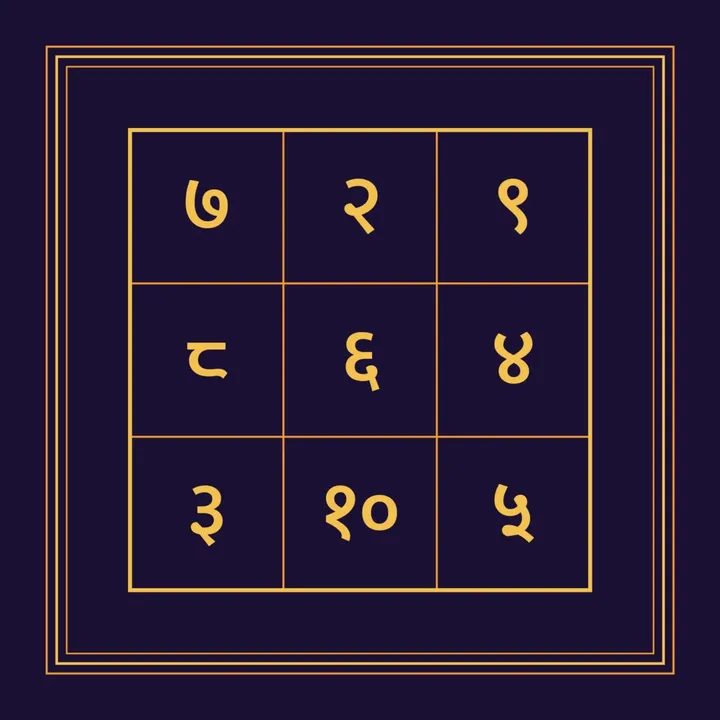
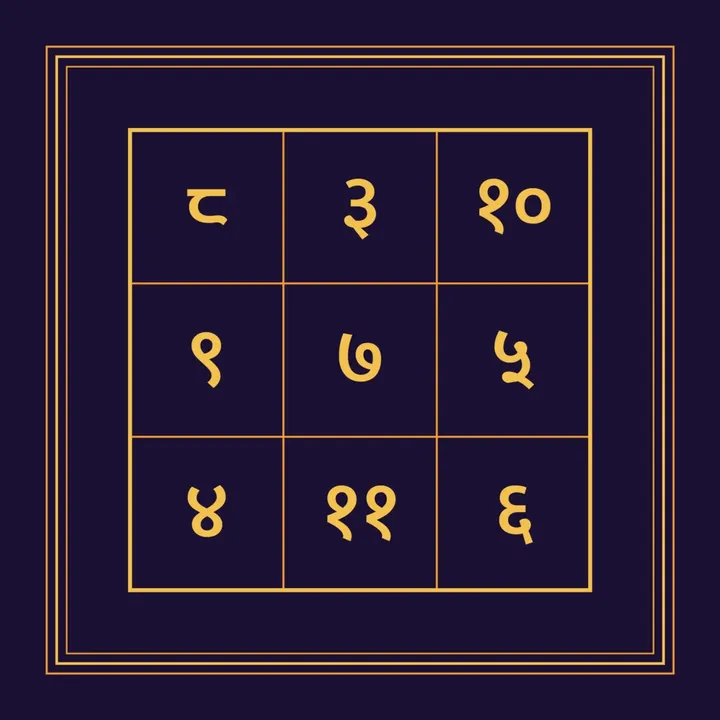
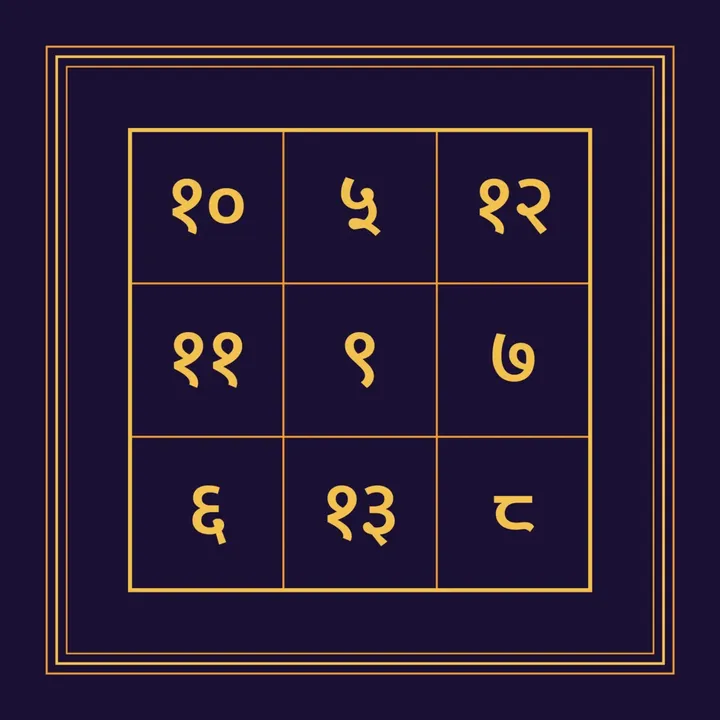
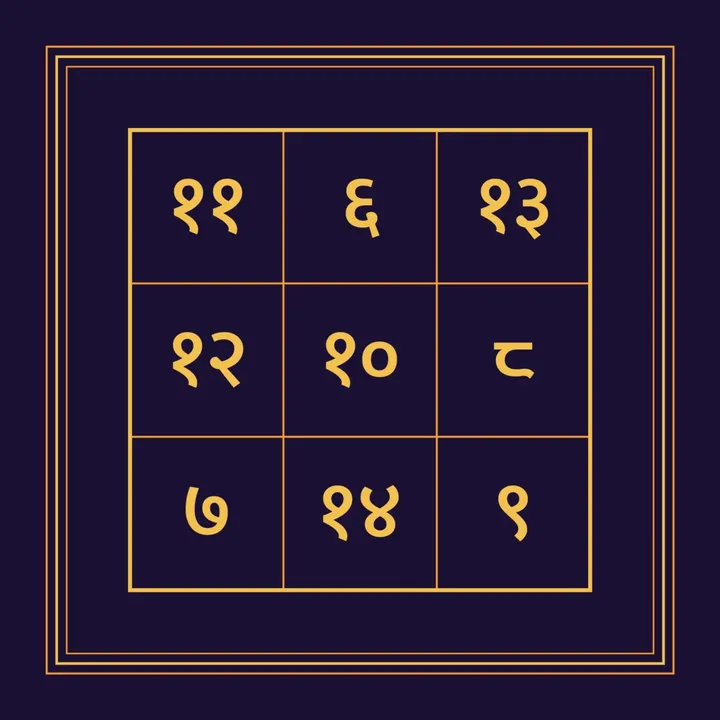
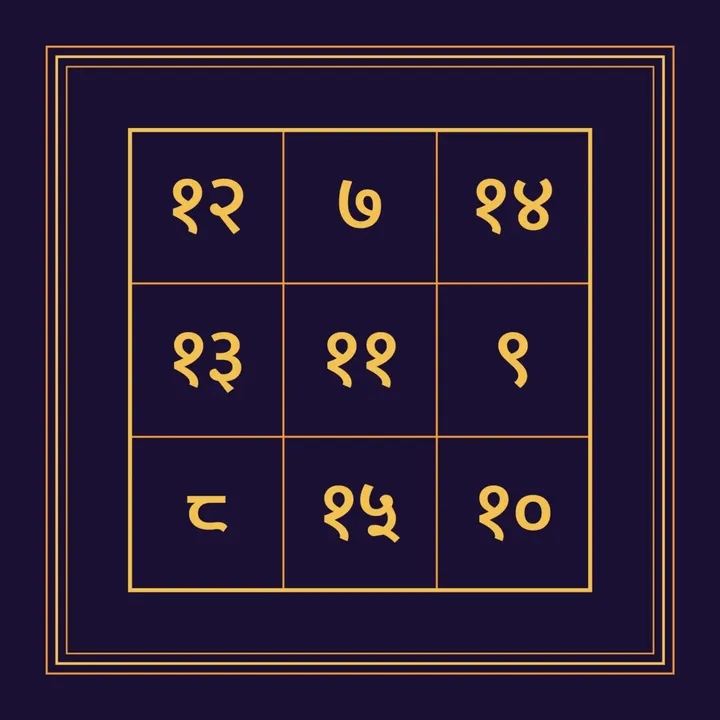
The number square is the same in every source checked; what changes from print to print is the frame, such as how many petals and rings there are, whether a star is drawn, and whether a mantra is written around the square. Like the NCERT figure, many prints use the digits 27, 20, 25 instead of Devanagari digits. Some websites print a wrong square in which a number appears twice (for example 21 and 25); the true square uses each number from 20 to 28 exactly once.