 Karmandir
About
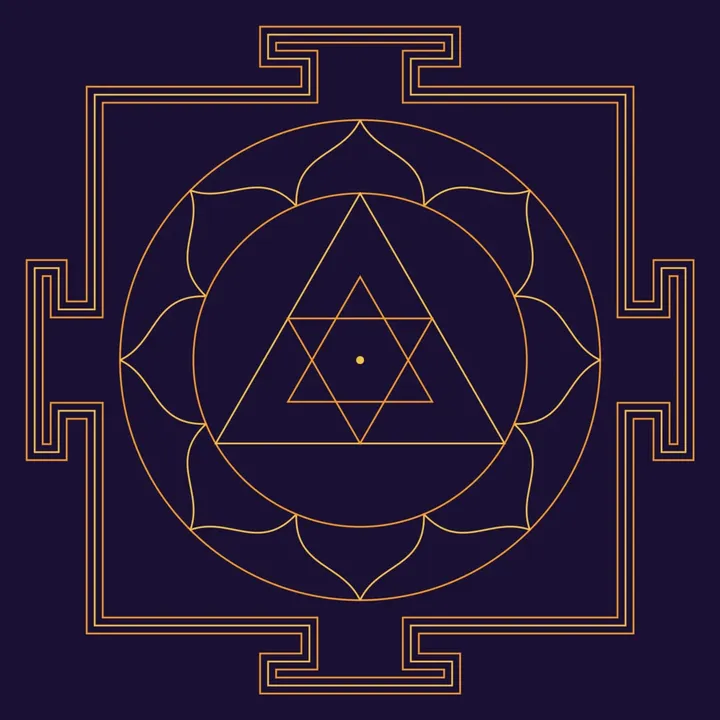
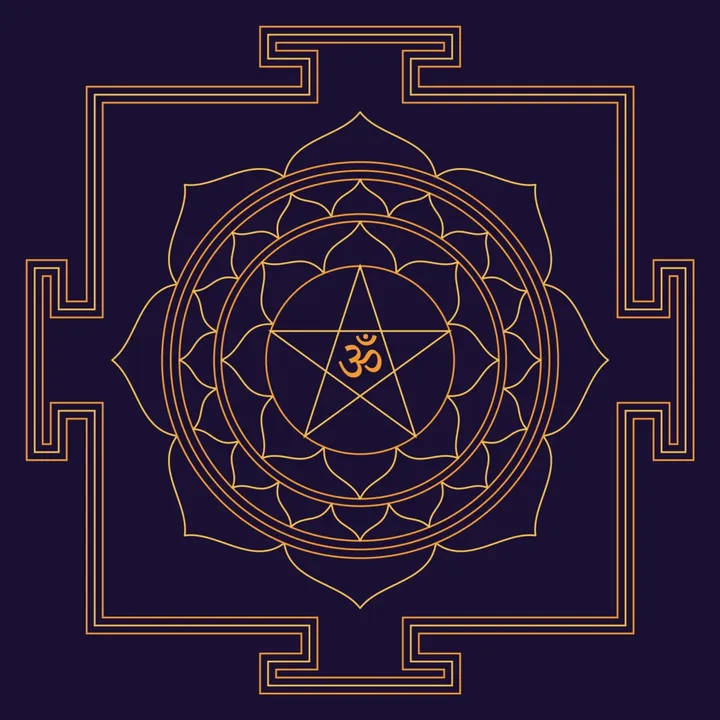
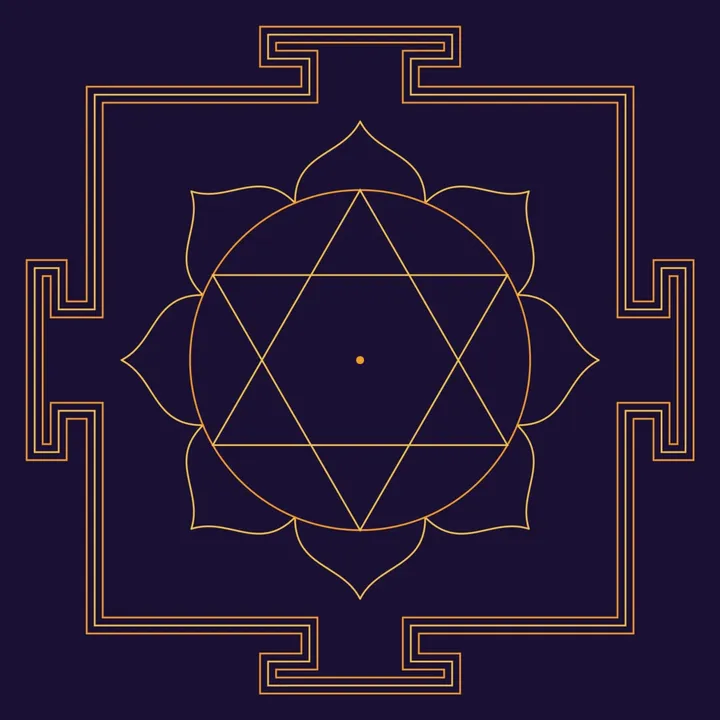
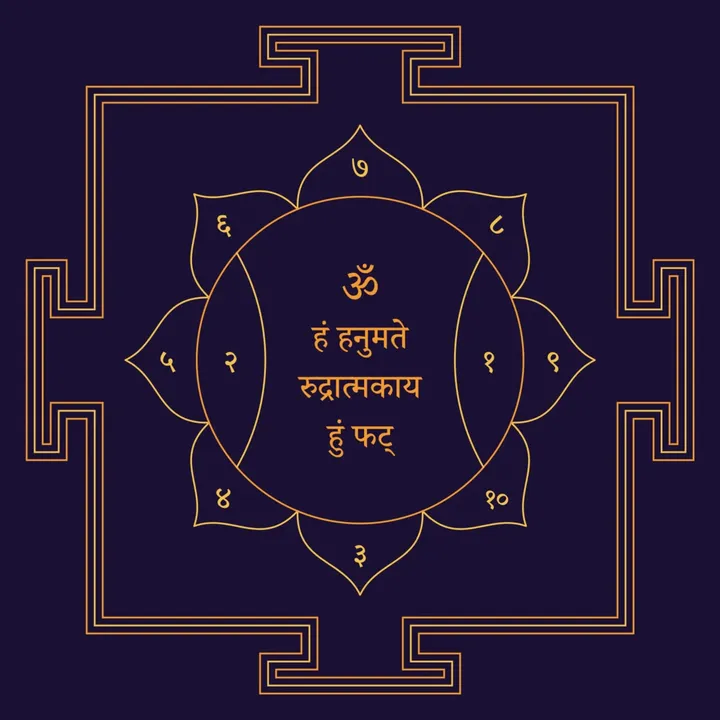
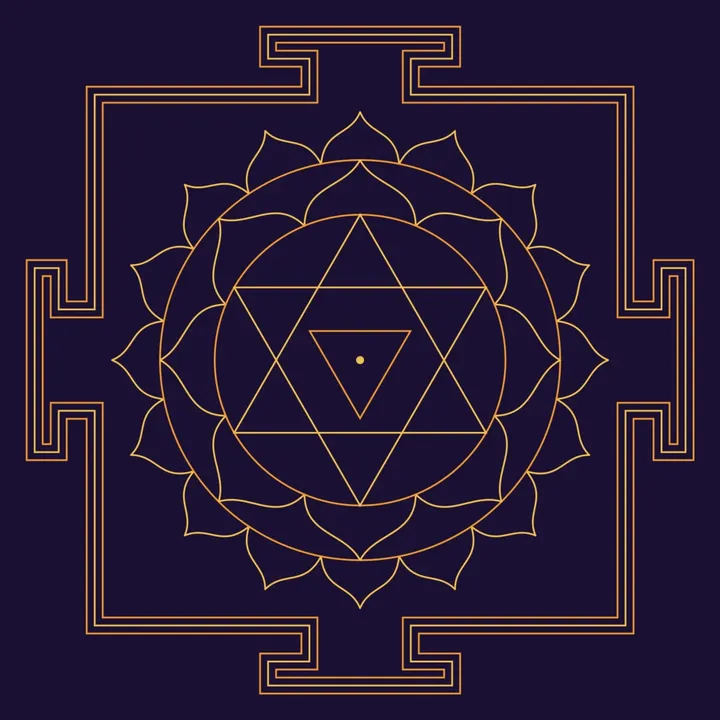
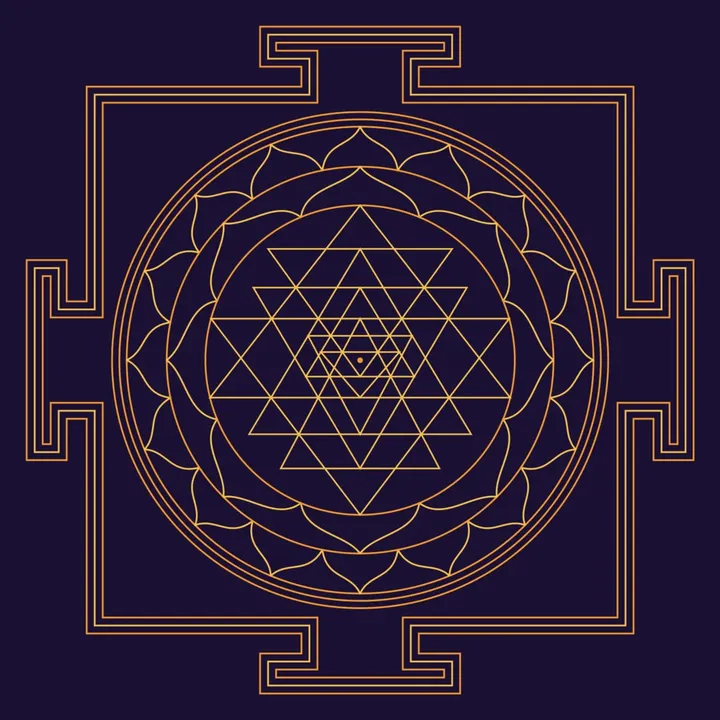
The Shri Yantra, also called the Shri Chakra, is the best-known yantra in Hindu worship. In the Shri Vidya tradition it is honoured as the form of the Divine Mother, Lalita Tripura Sundari, and in many homes it is kept in the puja place as the yantra of Maa Lakshmi. Nine triangles cross one another around a central dot: four point up and five point down. Together they make 43 small triangles, held inside two rings of lotus petals, three circles and a square frame with four gates. Devotees see in it the meeting of Shiv and Shakti, and the whole of creation unfolding from a single point.
Parts of the yantra
From the outside in: the bhupura, a square of three lines with a gate on each side; three circles; a lotus of 16 petals; a lotus of 8 petals; and a circle holding the nine triangles. Where the triangles cross they form rings of 14, 10, 10 and 8 small triangles and one central triangle, 43 in all. The four upward triangles are linked with Shiv and the five downward ones with Shakti. The bindu, the dot inside the central triangle, stands for the Devi herself. Tradition counts these nine layers as nine chakras (avaranas), from Trailokya Mohana at the square to Sarvanandamaya at the bindu.
How to use it
Keep the yantra upright as drawn, with the small central triangle pointing down, on a clean raised place in your puja corner. Light a diya, offer a flower or a pinch of kumkum, and sit quietly facing it. Let your eyes travel slowly from the square, through the petals and the triangles, to the dot at the centre, breathing calmly; you may chant ॐ श्रीं महालक्ष्म्यै नमः softly. Use it as an aid to focus and devotion. The full Shri Vidya worship of the Shri Chakra is learnt from a guru.
ॐ श्रीं महालक्ष्म्यै नमः
Om Shreem Mahalakshmyai Namah →
Old texts describe the figure only roughly, so the proportions of the triangles differ a little from plate to plate. This drawing uses one exact solution in which every point where three lines meet closes cleanly. The Shri Yantra is also made as a raised, three-dimensional Meru. Some plates write bija letters in the petals; this drawing shows only the lines.