 Karmandir
ॐ साईं राम
About
Sai Baba of Shirdi was a saint who lived in the village of Shirdi in Maharashtra for about sixty years, until 1918. No one knows for certain where he was born or who his parents were. He lived very simply in an old mosque that he named Dwarkamai. There he kept a sacred fire (dhuni) burning and gave its ash, called udi, to visitors. He is revered by Hindus and Muslims alike. His two great teachings were Shraddha and Saburi: faith and patience. Many Hindu devotees see him as a sadguru and as a form of Lord Dattatreya. Thursday is his special day.
The story
Around the middle of the 1800s, a young man of about sixteen appeared in Shirdi. He sat in meditation under a neem tree day and night, caring nothing for heat or cold. The villagers wondered at such calm in someone so young. After some time, he left the village.
About a year later, around 1858, he came back with a wedding party that stopped near the Khandoba temple. As the young fakir stepped down from the cart, the temple priest Mhalsapati greeted him warmly: 'Ya Sai', meaning 'Welcome, Sai'. Others too began to call him Sai, and the name stayed. This time he remained in Shirdi for good.
At first he lived under the same neem tree; the spot is now called Gurusthan. Later he moved into an old, broken-down mosque and named it Dwarkamai. There he kept a dhuni burning day and night and gave its udi as prasad to those who came. He begged for food in the village and shared whatever he got with everyone, even dogs, cats and birds. Sometimes he cooked khichdi in a big pot and fed all who came.
He often said 'Allah Malik', meaning God alone is the master of all. People of every faith came to him, and from everyone he asked for only two things: faith and patience. On Vijayadashami, 15 October 1918, Sai Baba left his body. Devotees from all over the world now visit his samadhi in Shirdi.
How they are shown
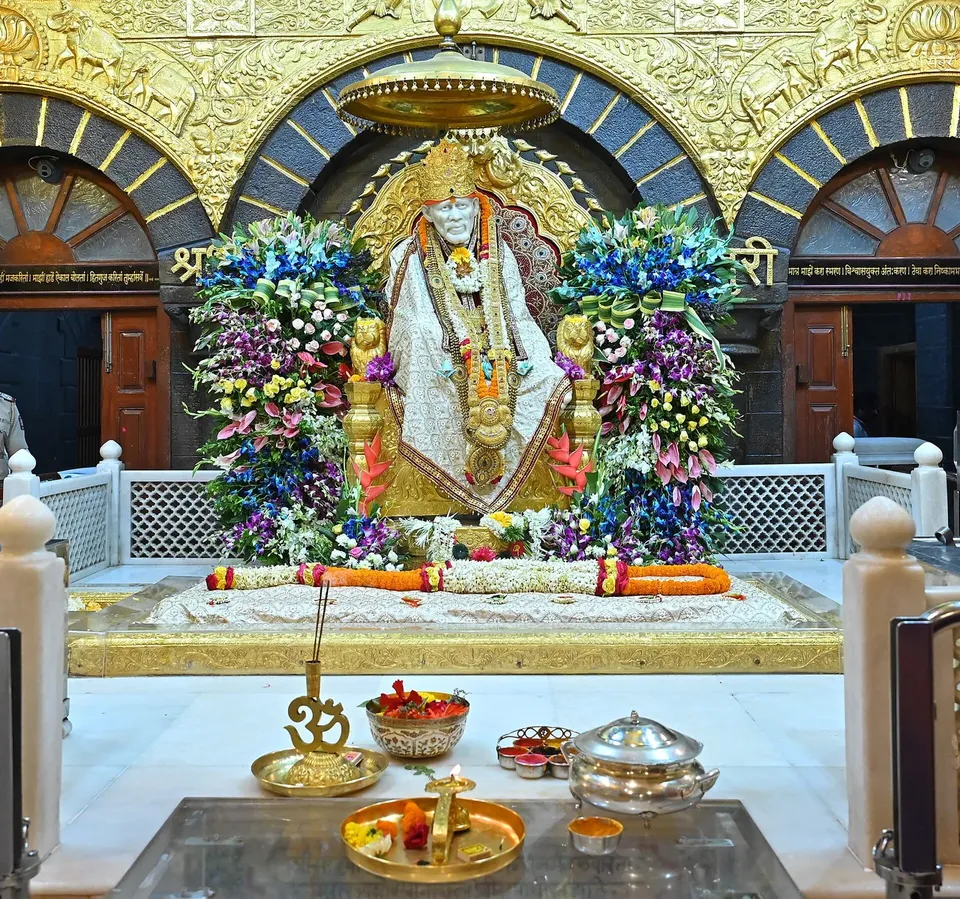
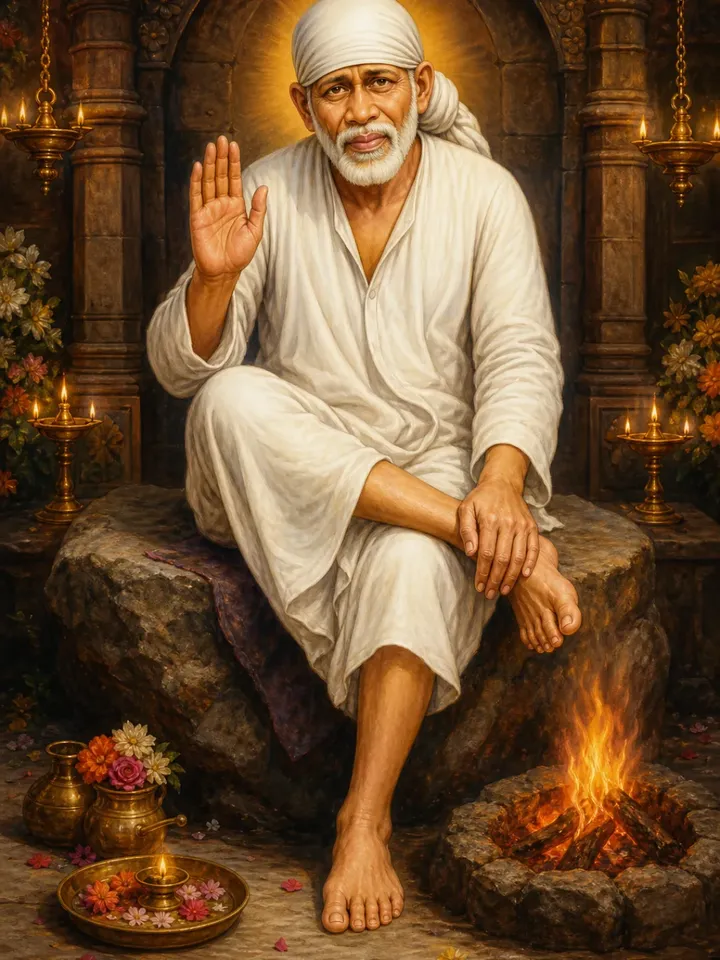
Sai Baba is usually shown seated on a stone, his right leg resting over his left knee. He wears a white kafni (long robe), with a white cloth tied around his head. His right hand is often raised in blessing. Sometimes he holds a short stick (satka), and a dhuni fire glows beside him. The simple robe recalls his life of renunciation, the dhuni and udi remind devotees that the body does not last, and the raised hand stands for his loving care for his devotees.
How to worship
Thursday (Guruvar)
Khichdi, sweet rice or any simple home-cooked food, with flowers and a garland. Udi is shared as prasad. Feeding someone who is hungry is also seen as a service dear to Baba.
Place a picture of Sai Baba on a clean cloth and light a diya and agarbatti. Offer flowers and a garland, and a little udi if you have some. Chant 'Om Sai Ram' 108 times, or read one chapter of the Shri Sai Satcharitra. Sing 'Aarti Shri Sai Guruvar Ki' and offer khichdi or a simple sweet as bhog. On Thursdays many devotees keep a light fast and do one good deed in Baba's name, such as feeding the hungry, giving water to the thirsty or helping someone in need, as Baba taught.
Their festivals
- Ram Navami (Shirdi festival) Chaitra Shukla Navami; celebrated at Shirdi since 1912
- Guru Purnima Ashadh Purnima
- Vijayadashami (Baba's Punyatithi) Ashwin Shukla Dashami; the day Baba left his body in 1918