 Karmandir
About
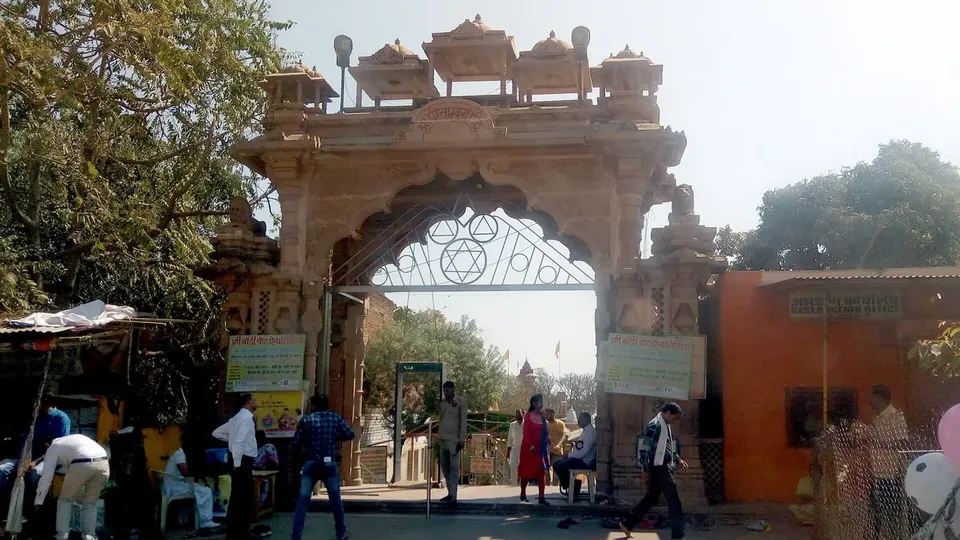
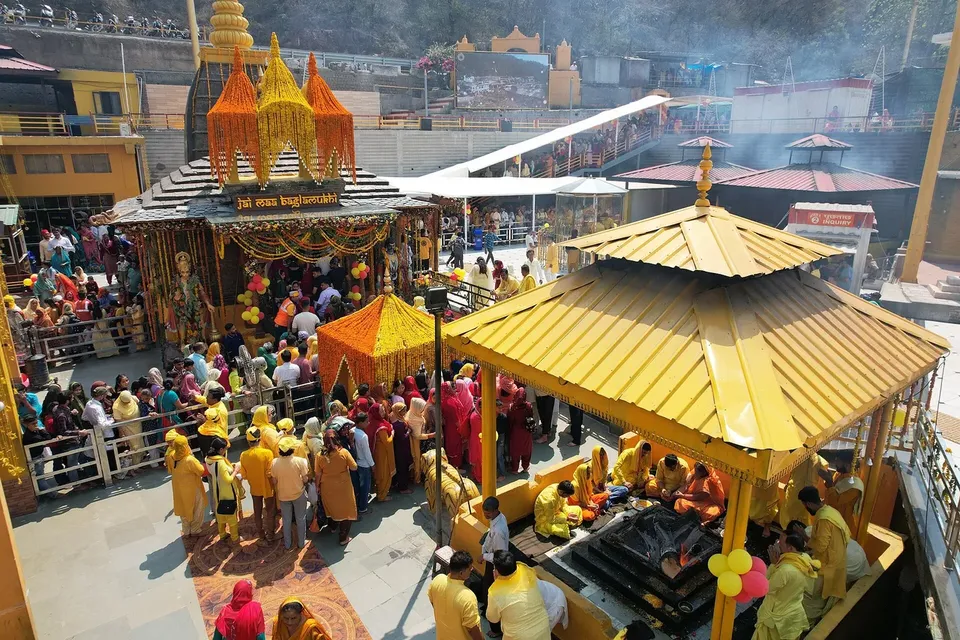
Maa Baglamukhi is the eighth of the ten Mahavidyas, the great forms of the Divine Mother's wisdom and power. She is also called Pitambara, 'the one dressed in yellow', and yellow runs through all her worship: yellow clothes, yellow flowers, turmeric and yellow sweets. Her stories are about stillness: she calms a destructive storm and stops speech that causes harm. Devotees pray to her for a steady mind and inner strength. Her best-known shrines are Shri Pitambara Peeth at Datia and the temple at Nalkheda in Madhya Pradesh, and the Bankhandi temple in Kangra, Himachal Pradesh.
The story
In the Satya Yug a terrible storm rose and began to destroy all creation. Worried for the world, Bhagwan Vishnu went to the shore of the Haridra Sarovar, a lake whose water was yellow like turmeric and which is said to be in Saurashtra. There he did hard tapasya and prayed to the Divine Mother. Pleased, the Devi rose from the yellow water as Baglamukhi, shining like gold, and calmed the storm. Creation was saved, and from then on yellow has been her colour.
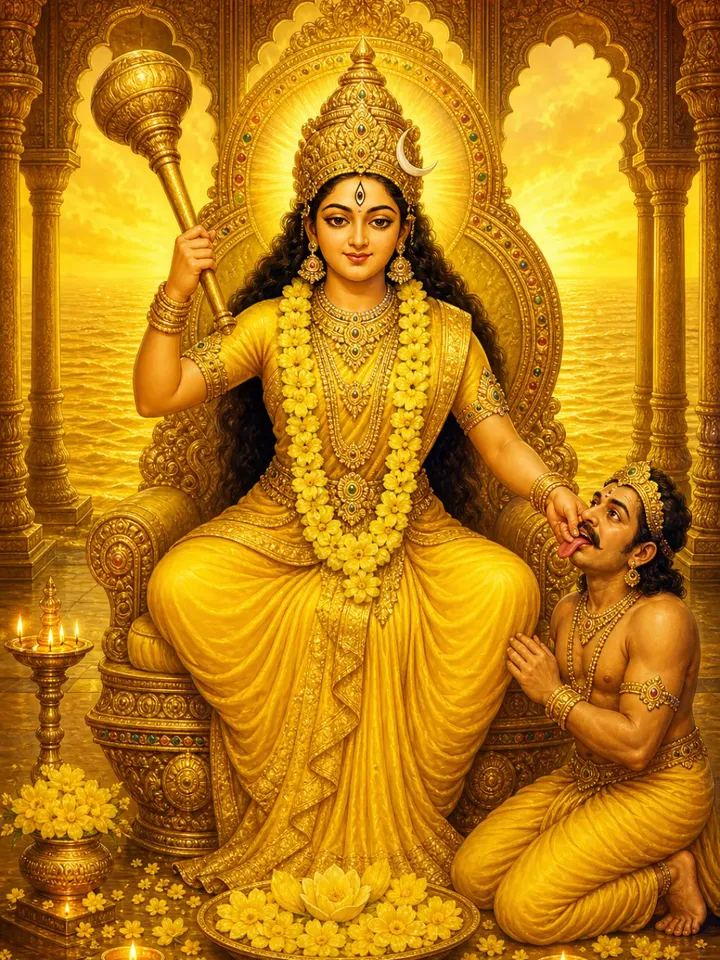
Another story tells of a demon named Madan who gained vak-siddhi: whatever he said came true. He used this power to trouble people. When the gods prayed to the Mother, she caught hold of his tongue and stopped his power. That is why she is shown holding a demon's tongue; devotees understand it as a check on speech that hurts.
At Bankhandi in Kangra, local tradition says the Pandavs built her temple in a single night during their exile. In the twentieth century a sannyasi known only as 'Swami ji Maharaj' founded Shri Pitambara Peeth at Datia, today her best-known shrine.
How they are shown
Maa Baglamukhi has a golden-yellow complexion. She wears yellow clothes, a garland of yellow flowers and golden ornaments, with a crescent moon on her forehead. She sits on a jewelled golden throne on an altar in the middle of an ocean. In her two-armed form she raises a club (mudgar) in her right hand and holds a demon's tongue with her left. At Datia she is worshipped in a four-armed form. The club stands for strength, and holding the tongue for stopping harmful speech.
How to worship
Yellow flowers, turmeric, a yellow chunri or cloth, coconut, and yellow sweets such as besan laddoos
Her worship is yellow from start to finish. Spread a yellow cloth, place her picture on it, and wear yellow yourself if you can. Light a ghee diya and offer yellow flowers, a pinch of turmeric and a yellow sweet. Chant 'Om Bagalayai Namah' 108 times; by tradition a turmeric (haldi) mala is used. Pray to the Mother for a calm mind and wise, gentle speech. Her tantric sadhana and mool mantra are traditionally taken up only after diksha from a guru, so at home keep to simple naam-jap and aarti.
Their festivals
- Baglamukhi Jayanti Vaishakh Shukla Ashtami
- Chaitra Navratri Chaitra Shukla Pratipada to Navami
- Sharad Navratri Ashwin Shukla Pratipada to Navami
Temples and tirth
Yantras
Sources
- en.wikipedia.org/wiki/Bagalamukhi
- hi.wikipedia.org/wiki/बगलामुखी
- en.wikipedia.org/wiki/Pitambara_Peeth
- bhaktibharat.com/mandir/pitambara-peeth
- bhaktibharat.com/katha/maa-baglamukhi-pauranik-katha
- bhaktibharat.com/festival/baglamukhi-jayanti
- hpkangra.nic.in/tourist-place/shri-bagalamukhi-mata-temple/
- drikpanchang.com/vedic-mantra/goddesses/parvati/mahavidya/bagalamukhi/…