 Karmandir
About
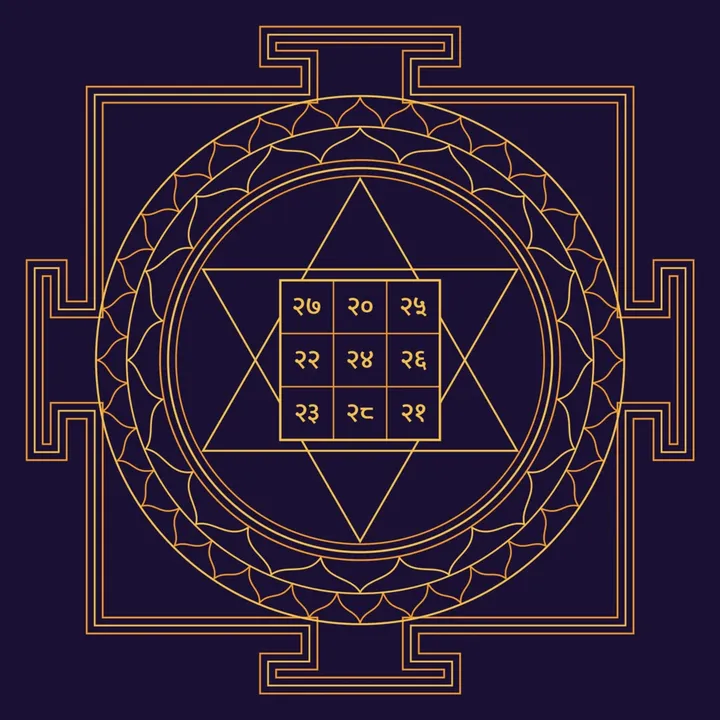
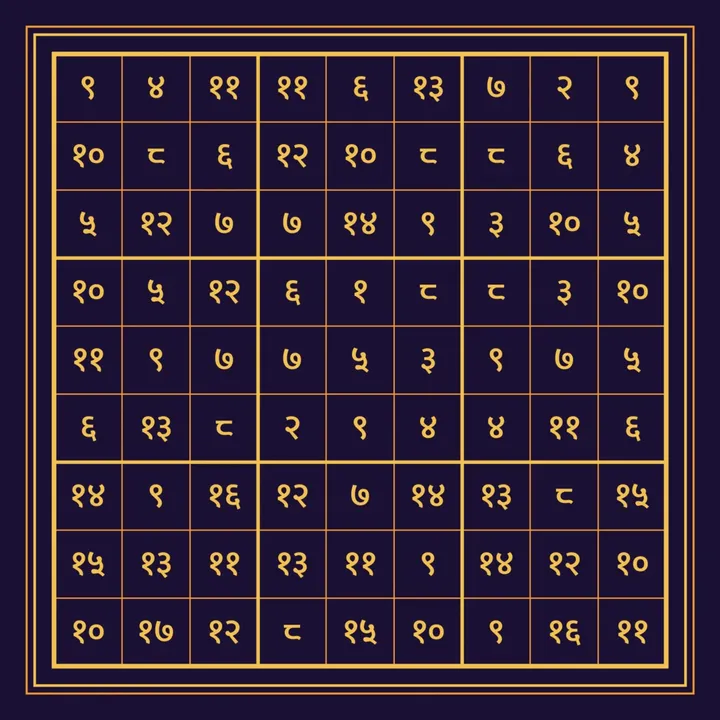
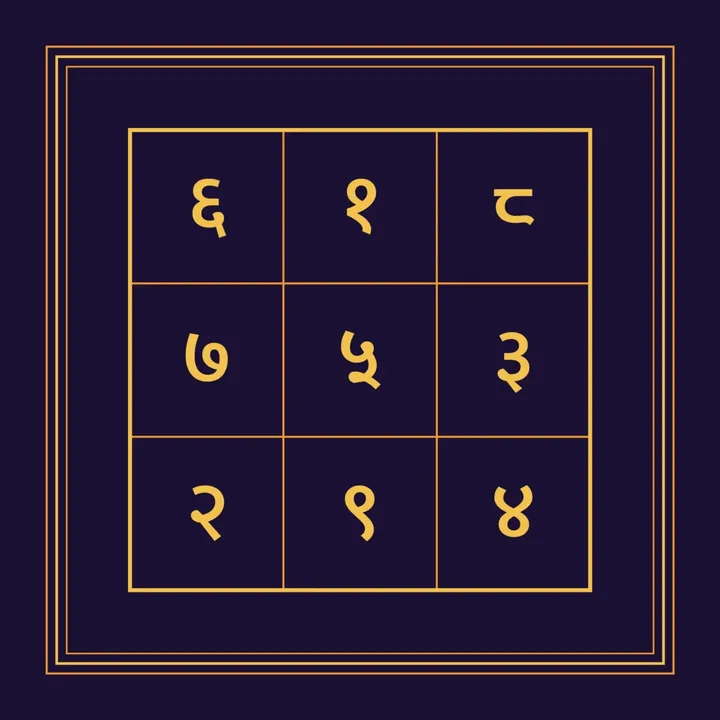
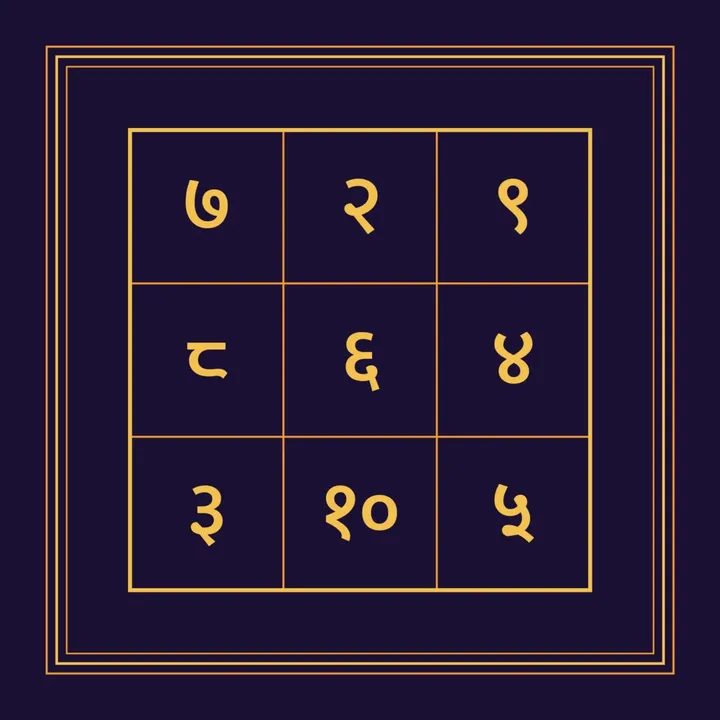
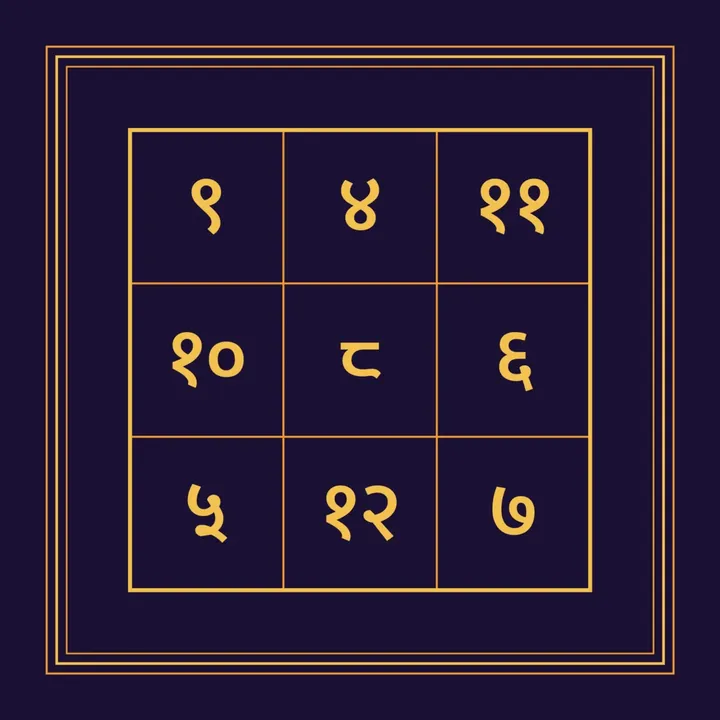
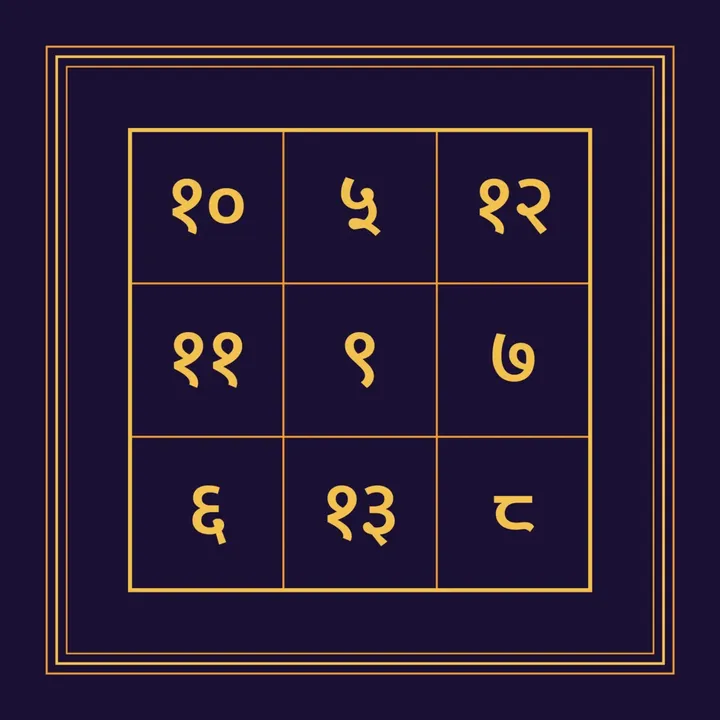
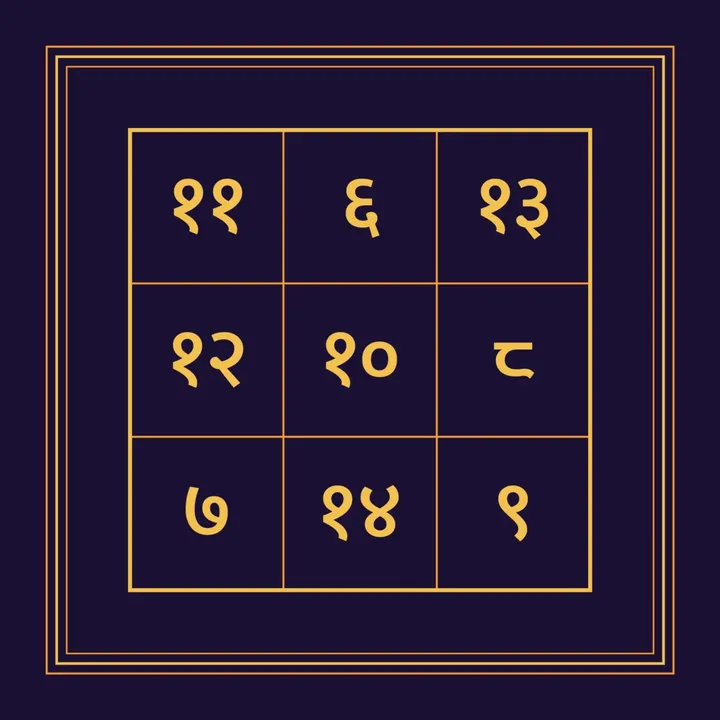
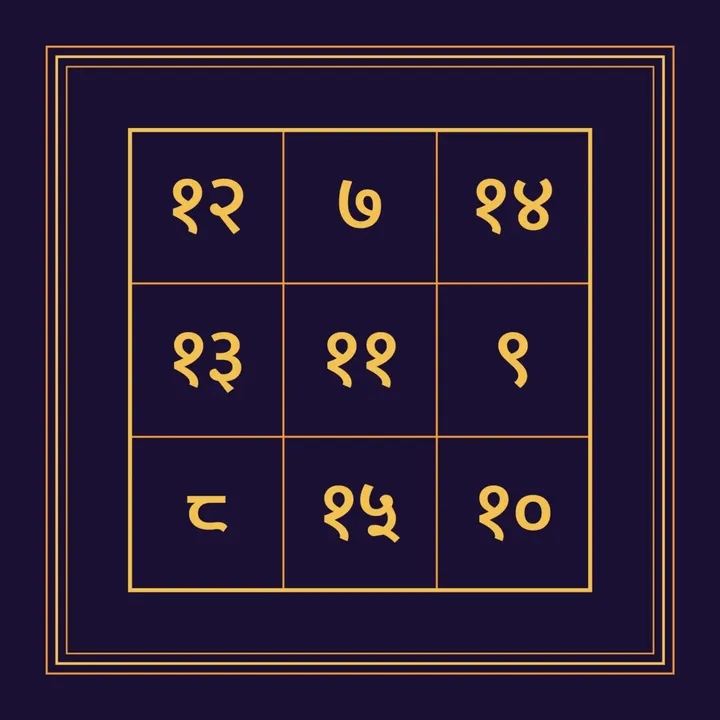
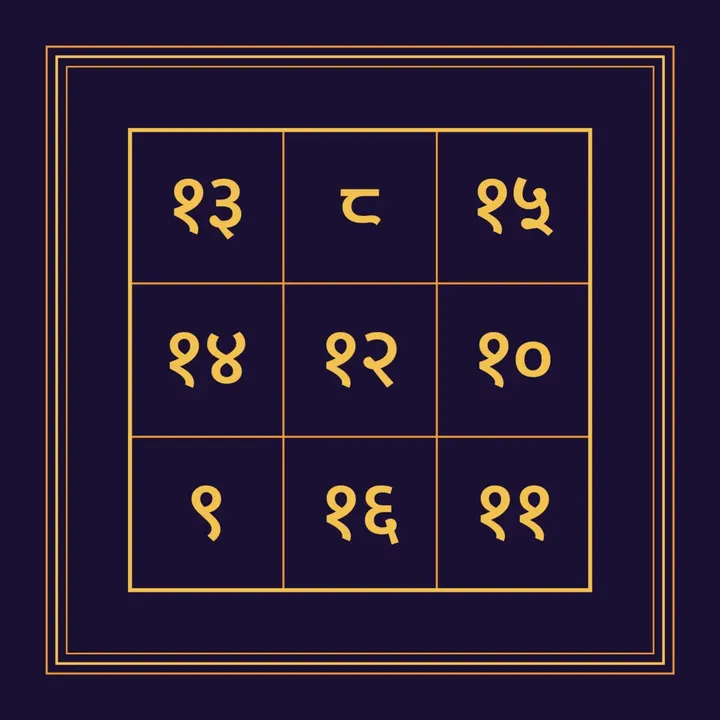
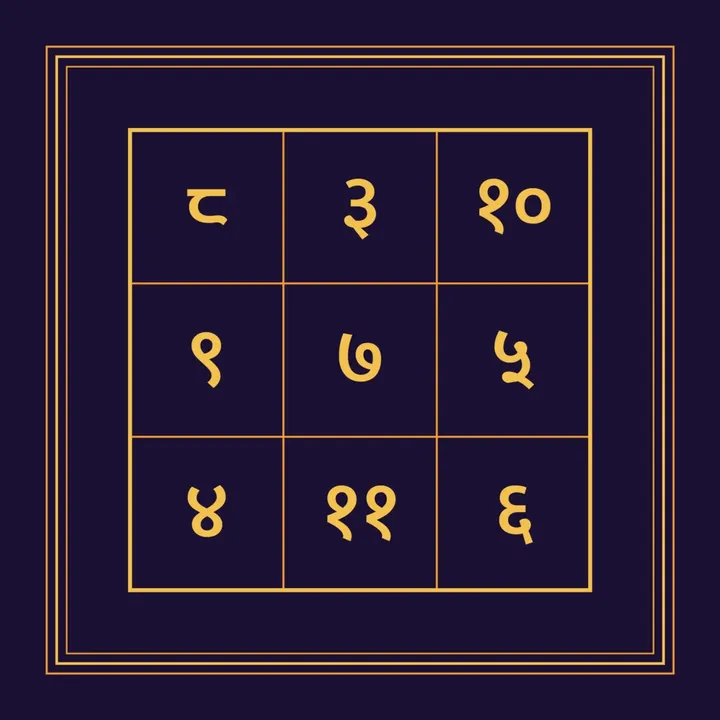
The Mangal Yantra is the number yantra of Mangal dev, also called Bhaum, the son of Mother Earth. Its nine numbers run from 3 to 11, the Surya square with 2 added to each, so every row, every column and both diagonals add up to 21, with 7 in the middle. In the full Navagraha Yantra, Mangal's square sits on the south side, the place the Matsya Purana gives him. Families keep it in the puja place and remember Mangal dev on Tuesdays with his verse from the Navagraha Stotram, which calls him a young warrior as bright as lightning.
Parts of the yantra
Number square: nine cells, written in Devanagari digits in the drawing — top row 8, 3, 10; middle row 9, 7, 5; bottom row 4, 11, 6. Every row, column and diagonal totals 21, and 7 sits in the middle cell. Any two numbers facing each other across the middle always add up to 14. Lines: a gold outer line closes the square and saffron lines divide it into nine cells. Frame: a plain border of three lines around the square, marking the yantra's space.
How to use it
Place the yantra upright on a clean cloth in the puja place. On a Tuesday, or on any day, light a diya, offer a flower and sit quietly facing it. Rest your eyes first on the middle number, 7, then move them through the numbers from 3 up to 11, one cell at a time; this gives the mind one calm thing to follow. Then read Mangal dev's verse from the Navagraha Stotram (धरणीगर्भसंभूतं…) once, or 11 times. Wipe the yantra with a soft, dry cloth to keep it clean.
धरणीगर्भसंभूतं विद्युत्कान्तिसमप्रभम्। कुमारं शक्तिहस्तं तं मङ्गलं प्रणमाम्यहम्॥
Dharani Garbha Sambhutam Vidyut Kanti Samaprabham. →
Frames differ from print to print: the NCERT figure, for example, draws this square inside a triangle. Many prints use the digits 1, 2, 3 instead of the Devanagari digits used here. The numbers and their places stay the same.