 Karmandir
जय महाकाल
About
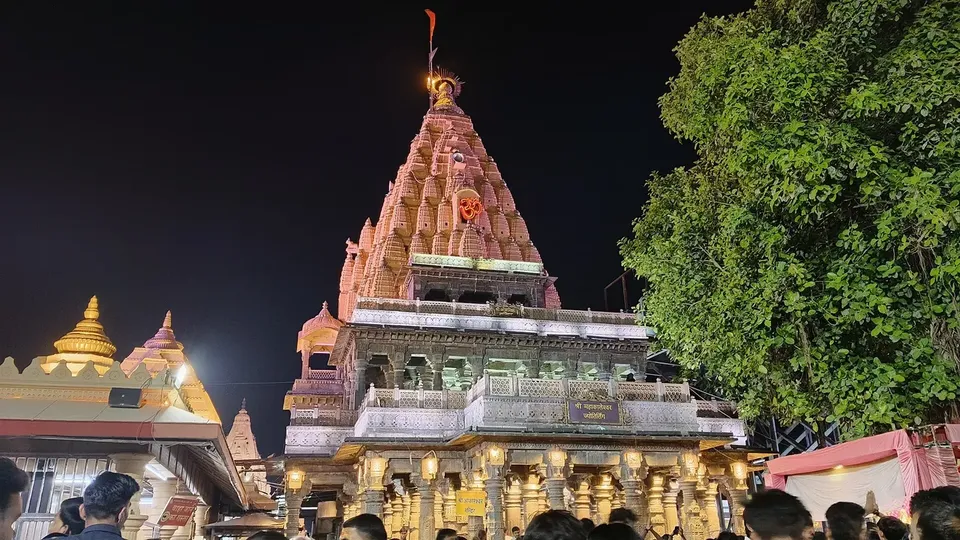
Mahakal is Shiv ji as worshipped at the Mahakaleshwar Jyotirlinga in Ujjain, the ancient Avantika, near the river Shipra in Madhya Pradesh. It is the third of the twelve jyotirlingas. The linga here is believed to be swayambhu (self-born) and it faces south; it is the only one of the twelve that does. The south is linked with time and death, and here Shiv is worshipped as Mahakal, the Lord of Time. Devotees lovingly call him Baba Mahakal. His Bhasma Aarti before dawn, when the linga is adorned with sacred ash, is known all over India. Ujjain also hosts the Simhastha Kumbh every twelve years.
The story
The Shiv Puran tells two stories of Mahakal. In the first, a demon named Dushan, proud of a boon from Brahma ji, marched on Avantika to stop all worship. The four sons of a Brahmin named Vedapriya had no weapons; they simply sat before their clay Shivling and kept praying. Then the earth beside the linga split open, Shiv rose as Mahakal, and with a single roar he ended the demon. At the devotees' request he stayed there for ever as the jyotirlinga.
The second story is about King Chandrasen of Ujjain, a great devotee of Shiv, who owned a shining gem. Greedy for it, other kings surrounded the city, and the king turned to Mahakal in worship day and night. A cowherd woman came with her five-year-old son to watch the king's puja. Back home, the little boy picked up a smooth stone, treated it as a Shivling and worshipped it with leaves, flowers and offerings he could only imagine, forgetting even his meal. When his mother angrily threw the stone away, he cried until he fainted. When he woke, he saw a golden temple of Shiv standing in its place. Hearing of this, the attacking kings understood that a city where even children worship Shiv cannot be conquered. They laid down their weapons, made friends and joined the worship. Then Hanuman ji appeared, blessed the boy and named him Shrikar.
How they are shown
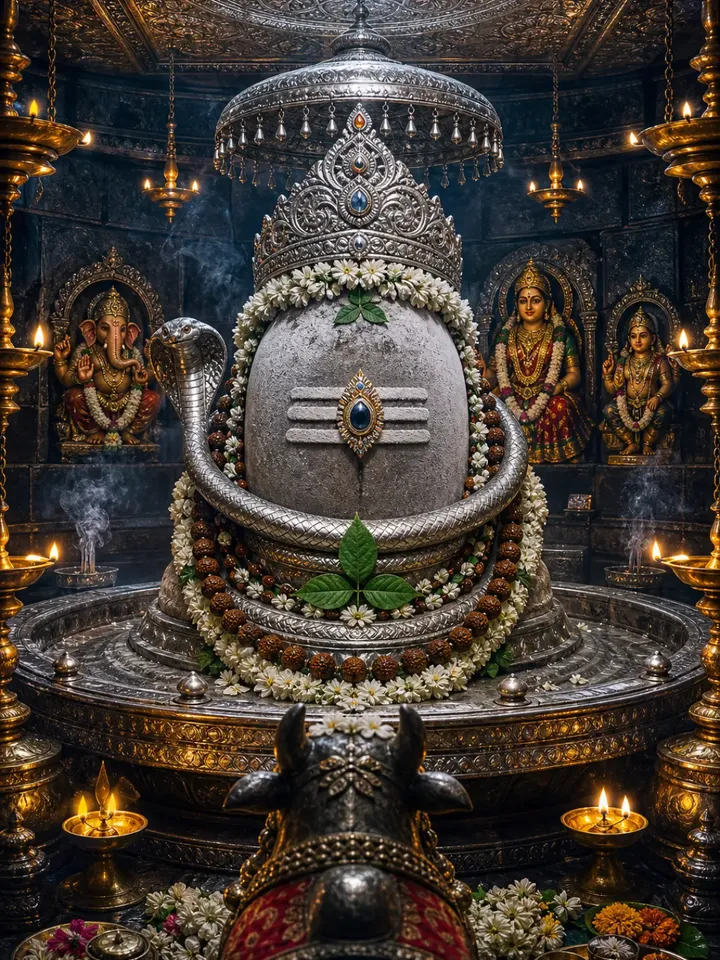
Mahakal is worshipped as a large, dark stone linga in a sanctum below ground level, facing south. The ceiling of the sanctum is covered with silver. In the Bhasma Aarti the linga is covered with white sacred ash and adorned with a silver crown, a serpent and jewels. The ash reminds devotees that everything in time passes away, while Shiv, the Lord of Time, remains. Murtis of Ganesh ji, Maa Parvati and Kartikeya stand on three sides of the sanctum, and Nandi sits facing the linga.
How to worship
Monday
Abhishek with water and milk, bel leaves, dhatura, white flowers, bhasma (vibhuti) and a sweet prasad
At home, keep a small Shivling or a picture of Mahakal in a clean place. Pour a little water, or water mixed with milk, over the Shivling and offer bel leaves and white flowers. If you wish, put a little vibhuti on the linga and a tripund on your own forehead. Light a ghee diya and recite the Mahakal shloka 'Avantikayam vihitavataram' from the longer Dwadash Jyotirlinga Stotram, then chant 'Om Namah Shivaya' on a rudraksha mala. End with the aarti 'Om Jai Shiv Omkara'. Mondays and the month of Sawan are special for this puja.
Their festivals
- Maha Shivratri Phalgun Krishna Chaturdashi
- Mahakal Sawari (procession) Mondays of Shravan and Bhadrapad
- Nag Panchami (darshan of Nagchandreshwar) Shravan Shukla Panchami
- Simhastha Kumbh Every twelve years, when Jupiter is in Simha (Leo)
Aarti, chalisa and katha
Temples and tirth
Sources
- en.wikipedia.org/wiki/Mahakaleshwar_Jyotirlinga
- hi.wikipedia.org/wiki/उज्जैन_का_महाकालेश्वर_मंदिर
- ujjain.nic.in/tourist-place/shri-mahakaleshwar-temple/
- incredibleindia.gov.in/en/madhya-pradesh/ujjain/mahakaleshwar-temple
- bhaktibharat.com/mandir/mahakaleshwar
- wisdomlib.org/hinduism/book/shiva-purana-english/d/doc226517.html
- wisdomlib.org/hinduism/book/shiva-purana-english/d/doc226518.html
- hi.wikipedia.org/wiki/सिंहस्थ
- bhaktibharat.com/bhajan/jai-mahakal-jai-mahakal