 Karmandir
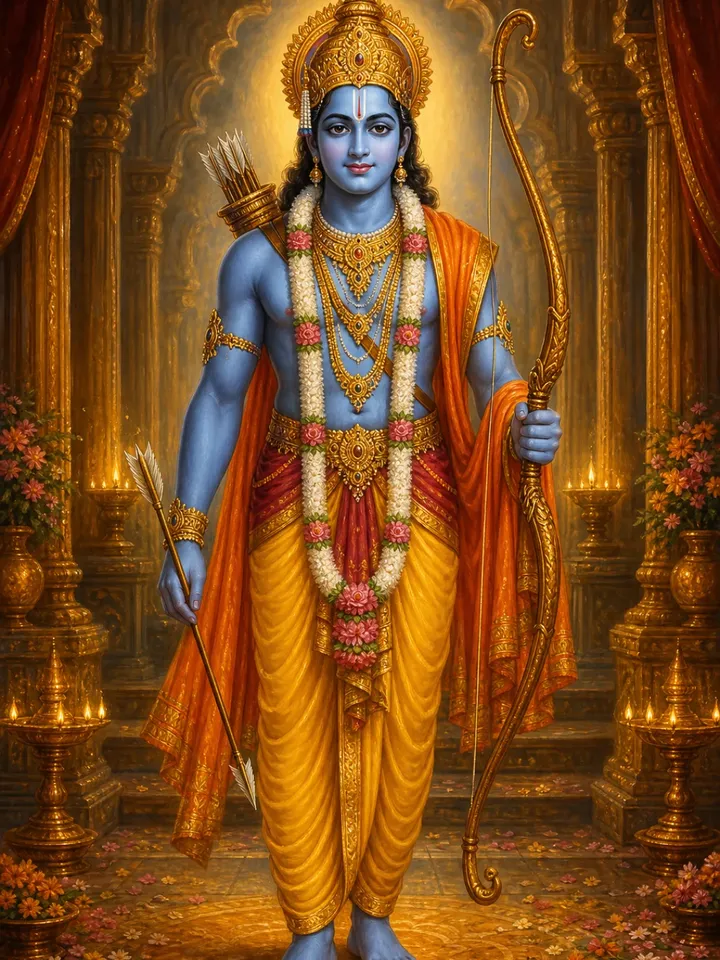
Sita Mata was in Lanka, and between Ram's army and Lanka lay a vast sea. Ram's monkey army decided, "We will build a bridge across the sea!"
In the army were two monkey brothers, Nal and Neel. It is said that as children they had received a rishi's blessing: heavy stones they touched would float on water. All the monkeys and bears began carrying big trees and rocks, shouting "Jai Shri Ram!" Nal and Neel caught them like balls and fitted them into the bridge. Everyone said it was Ram's glory that even stones could float.
On that same shore lived a tiny squirrel. She saw that everyone was busy with Ram's work. She thought, "I will help too!" But she was so small. How could she ever lift stones?
Then she had an idea. She dipped herself in the sea water, then rolled in the sand on the shore so that the sand stuck to her fur. Then she ran onto the bridge and shook herself, so the sand filled the little gaps between the stones. She did this again and again, without getting tired.
Some monkeys saw her and laughed. One said, "Hey, little one, get out of our way! What good will your few grains of sand do?" The squirrel did not stop. She said, "I am doing as much as I can. This is Ram's work."
Ram had been watching all this from a distance. He came close and very gently picked the little squirrel up in his palm. He said to the monkeys, "No work is small. This little squirrel has helped with all her strength and all her heart. The gaps between the big stones are filled by sand just like hers. Her love is no less than anyone's."
The monkeys understood their mistake and said sorry to the squirrel. Then Ram lovingly stroked her back with three fingers. The folk tale says that is why squirrels have three stripes on their backs, as a sign of Ram's love.
In just a few days the bridge was ready, and the whole army walked across it to the other side of the sea.
The lesson No help is too small when it is given with a full heart.
Source: Folk tradition, popular across India (not in Valmiki Ramayana); bridge details from Valmiki Ramayana, Yuddha Kanda 22 and Ramcharitmanas, Lanka Kand (retold)