 Karmandir
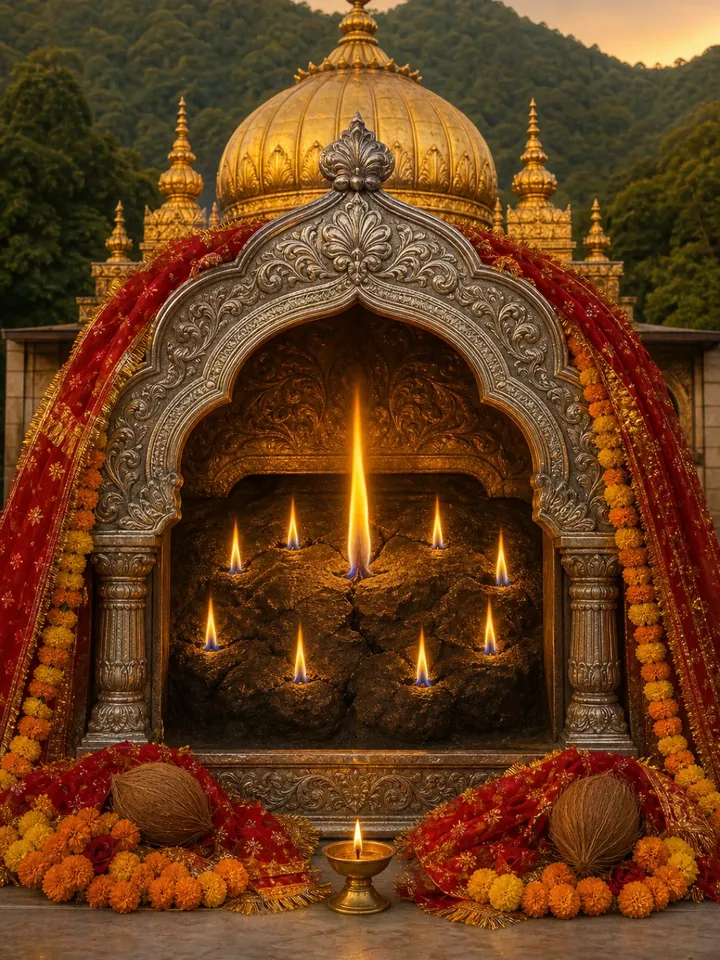
जय ज्वाला माँ
About
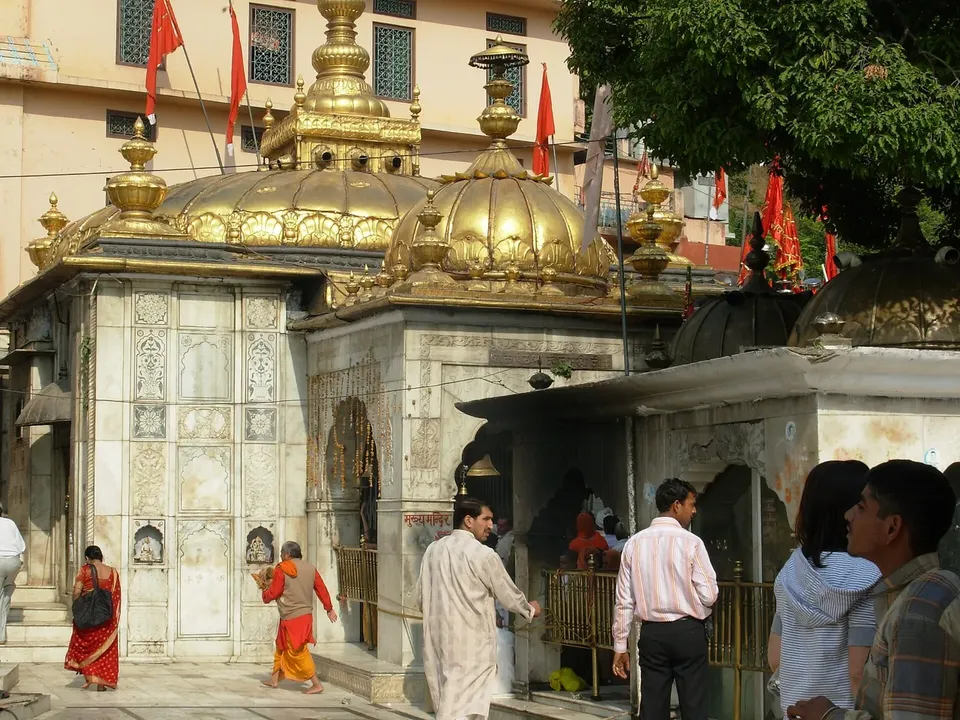
Jwala Ji, also called Jwalamukhi Mata, is the form of Maa Durga who is worshipped as living flames. Her temple stands in the town of Jawalamukhi in Kangra district, Himachal Pradesh, in the Kalidhar hills of the Shivalik range. There is no idol here. Small flames come out of cracks in the rock inside the sanctum, and these flames are worshipped as the Mother herself. The shrine is counted among the Shakti Peeths; by tradition, the tongue of Mata Sati fell here. Lakhs of devotees from all over India come for darshan, especially in the Chaitra and Ashwin Navratris.
The story
By tradition, when Lord Shiv wandered in grief carrying the body of Mata Sati, Lord Vishnu's Sudarshan chakra divided it, and the places where her body fell became Shakti Peeths. At Jawalamukhi, it is believed, her tongue fell, and the Mother appeared here as flame.
A local story tells of a cowherd who noticed that one of his cows always came home without milk. He followed her into the forest and saw a young girl drink the milk and vanish in a flash of light. He told the king, Raja Bhumi Chand, who knew that Sati's tongue had fallen somewhere in these hills. Some time later the cowherd saw a flame burning on the mountain. The king came, had darshan of the holy flame, built a temple there and arranged for daily worship.
Another story is linked with Guru Gorakhnath. It is said the Mother lit a fire to cook a meal for him, and he went to bring grain but never came back. Devotees believe the Mother still keeps that fire burning here as she waits for him.
Folk tradition also says that Emperor Akbar tried hard to put out the flames, but they kept burning. He then offered a golden chhatra (canopy) to the Mother, which, the story says, turned into an unknown metal. For devotees, these stories carry one message: the Mother's light never goes out, and pride must bow before her.
How they are shown
Jwala Ji has no idol. In the sanctum, small flames come out of a fissure in the rock and burn in a square, hollowed stone pit. Nine flames are counted, named after nine forms of the Mother: Mahakali, Annapurna, Chandi, Hinglaj, Vindhyavasini, Mahalakshmi, Saraswati, Ambika and Anji (Anjana) Devi. The main flame is revered as Mahakali. The flame shows the Mother as pure light and shakti, which no single shape can hold.
How to worship
At the temple the bhog is rabri (thickened milk), mishri (sugar crystals), milk and seasonal fruits; devotees offer coconuts and red chunris.
At home, light a ghee diya in a clean place and think of the Mother in its steady flame. Offer a red flower or a small red chunri, and keep a little mishri or milk as bhog. Say 'Jai Jwala Maa' or read the Narayani Stuti verse 'Jvala-karalam atyugram'; if you like, also sing the 'Jai Ambe Gauri' aarti or the Durga Chalisa. Sit quietly for a few moments looking at the flame. End with the Kshama Prarthana and share the prasad with the whole family.
Their festivals
- Chaitra Navratri Chaitra Shukla Pratipada to Navami
- Sharad Navratri Ashwin Shukla Pratipada to Navami
Aarti, chalisa and katha
Temples and tirth
Sources
- en.wikipedia.org/wiki/Jwala_(goddess)
- en.wikipedia.org/wiki/Jwalamukhi_temple,_Himachal_Pradesh
- jawalaji.in/
- gktoday.in/hindi/ज्वालामुखी-मंदिर-कांगड़ा/
- thecsrjournal.in/himanchal-pradesh-jwala-devi-temple-miraculous-shakti…
- amarujala.com/photo-gallery/spirituality/religion/magical-fire-of-temp…
- boldsky.com/yoga-spirituality/festivals/jwalamukhi-mandir-puja-rituals…
- kangratemples.hp.gov.in/hi/shri-jawala-mata-mandir/ (HP government…