 Karmandir
जय बाबे दी
About
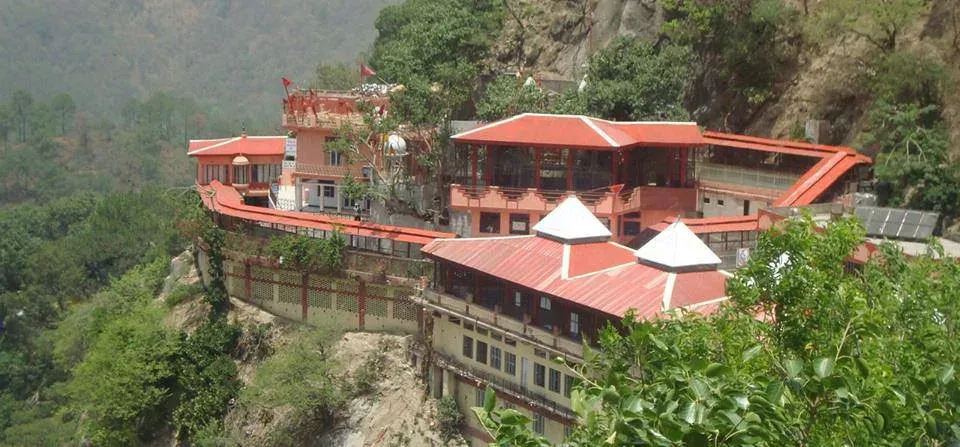
Sidh Baba Balak Nath is a much-loved folk deity of North India, worshipped with deep faith in Himachal Pradesh, Punjab, Haryana and Delhi. Devotees see him as a Siddh yogi who, by Shiv ji's blessing, remains forever a child; many also regard him as an avatar of Kartikeya (Skand) in Kali Yuga. His main shrine is Deotsidh, a natural cave on a hilltop at Chakmoh village in Hamirpur district, and nearby Shahtalai is believed to be where he did tapasya. Sunday is his special day, and devotees offer him 'rot'. By temple custom, women devotees take darshan from a raised platform built facing the cave.
The story
Devotees tell that Baba Balak Nath has appeared in every yuga: as 'Skand' in Satyug, 'Kaul' in Treta and 'Mahakaul' in Dwapar. In Dwapar, Mahakaul set out for Kailash to meet Shiv ji. On the way an old mother advised him to do tapasya by Mansarovar and to ask Mata Parvati how to reach Shiv ji. He did so and had Shiv ji's darshan. Shiv ji blessed him that he would be worshipped as a Siddh until Kali Yuga and would always keep the form of a child.
It is believed that in Kali Yuga he was born in Kathiawar, Gujarat. From childhood his mind was set on God. When his parents wanted to arrange his marriage, he left home. Tradition says that on Girnar hill he learned the path of the Siddhs from Guru Dattatreya, and from then on he was called Baba Balak Nath.
Wandering, he reached Shahtalai in Himachal. There Mata Ratno gave him work grazing her cows and sent him roti and lassi every day. Baba ji was so lost in tapasya that he kept the food aside. One day Ratno taunted him that she looked after him well but her cows were not cared for. The story says Baba ji then brought out all the rotis from the trunk of a tree and the lassi from the ground and gave them back. Devotees hold this as his leela.
Folk stories also tell of a long debate with Guru Gorakhnath, who wanted him to join his band of yogis, but Baba ji chose solitary tapasya. Later the hill cave at Deotsidh became his home, and devotees believe he still lives there.
How they are shown
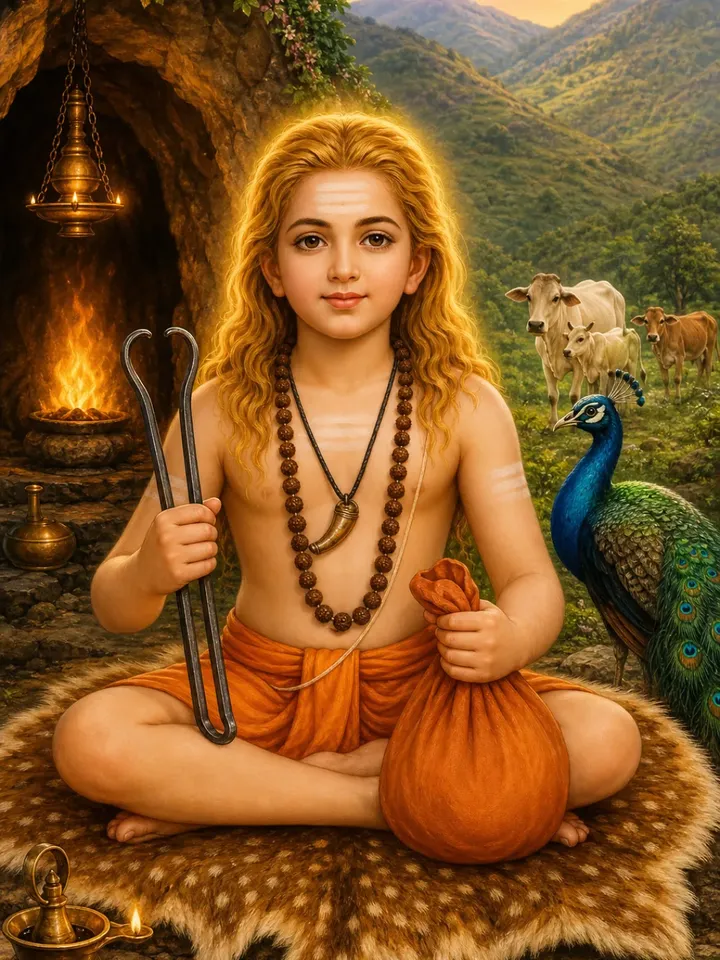
Baba Balak Nath is shown as a radiant boy-yogi with golden hair. He wears a rudraksha mala, carries a jholi (cloth bag) and a chimta (iron tongs), and sits on a deer skin; his aarti sings of each of these. Like the Nath yogis, he wears the seli thread and the singi (horn whistle). The peacock is believed to be his vahan, and cows recall his life as a cowherd. His child form stands for innocence and lifelong brahmacharya, and the jholi and chimta for renunciation.
How to worship
Sunday
Rot (a thick sweet bread of wheat flour with gur or sugar, cooked in ghee), with fruit, flowers, mishri and dry fruit.
On Sunday, keep a picture of Baba ji in a clean place. Light incense and a lamp, offer flowers, and offer rot or mishri and dry fruit as bhog. Then sing the aarti 'Om Jai Kaladhari Hare' and take Baba ji's name. Sunday is Baba ji's special day, and his temples see the most devotees then. Baba ji's story is tied to cows, so caring for cows on this day is also a loving seva. Many pilgrims to Deotsidh also visit nearby Shahtalai, believed to be where Baba ji did tapasya.
Their festivals
- Chaitra month fair, Deotsidh The whole solar month of Chet (Chaitra), about 14 March to 13 April; it opens with the jhanda (flag) ceremony
Temples and tirth
Sources
- en.wikipedia.org/wiki/Baba_Balak_Nath
- hi.wikipedia.org/wiki/बाबा_बालकनाथ
- hphamirpur.nic.in/?p=22706
- hamirpur.hptours.org/pilgrimage/temples/baba-balak-nath-temple-chakmoh…
- expressionjournal.com/downloads/1.-sunny-kumar-paper.pdf
- bhaktibharat.com/photo-stories/baba-balak-nath-temple-in-delhi
- amarujala.com/shimla/beginning-of-chaitra-month-fairs-in-baba-balak-na…
- amarujala.com/photo-gallery/shimla/woman-not-to-allowed-paid-obeisance…
- amarujala.com/himachal-pradesh/hamirpur-hp/baba-balak-nath-temple-onli…
- bhaktibharat.com/aarti/om-jai-kaladhari-hare-shri-baba-balaknath-aarti
- thebhajan.com/aarti/balaknath-ji-ki-aarti/
- thebhajan.com/chalisa/baba-balaknath-chalisa/