 Karmandir
About
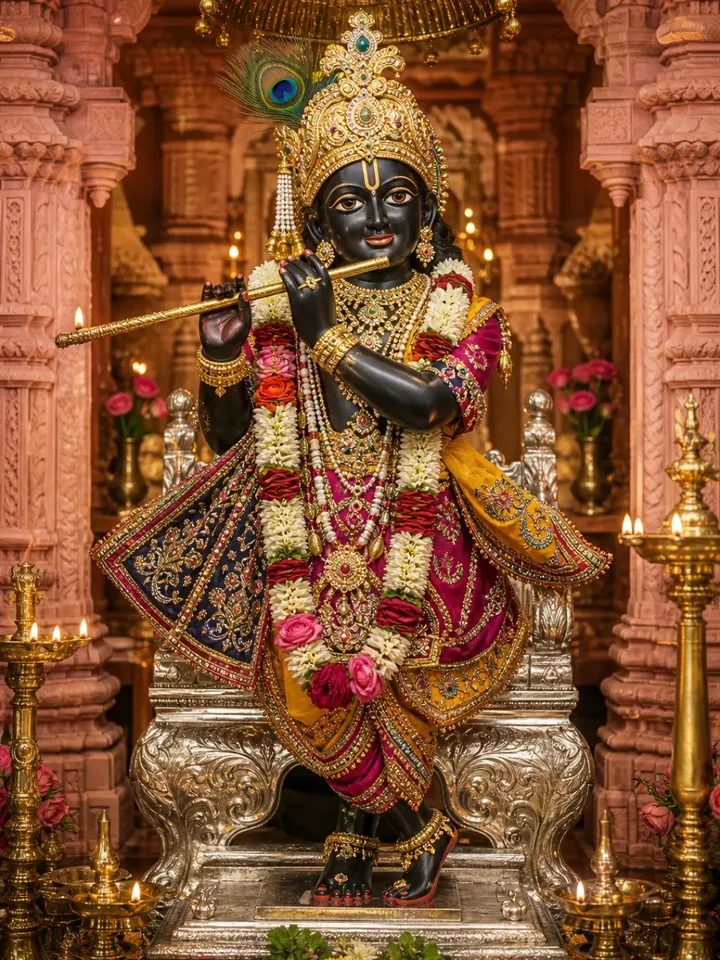
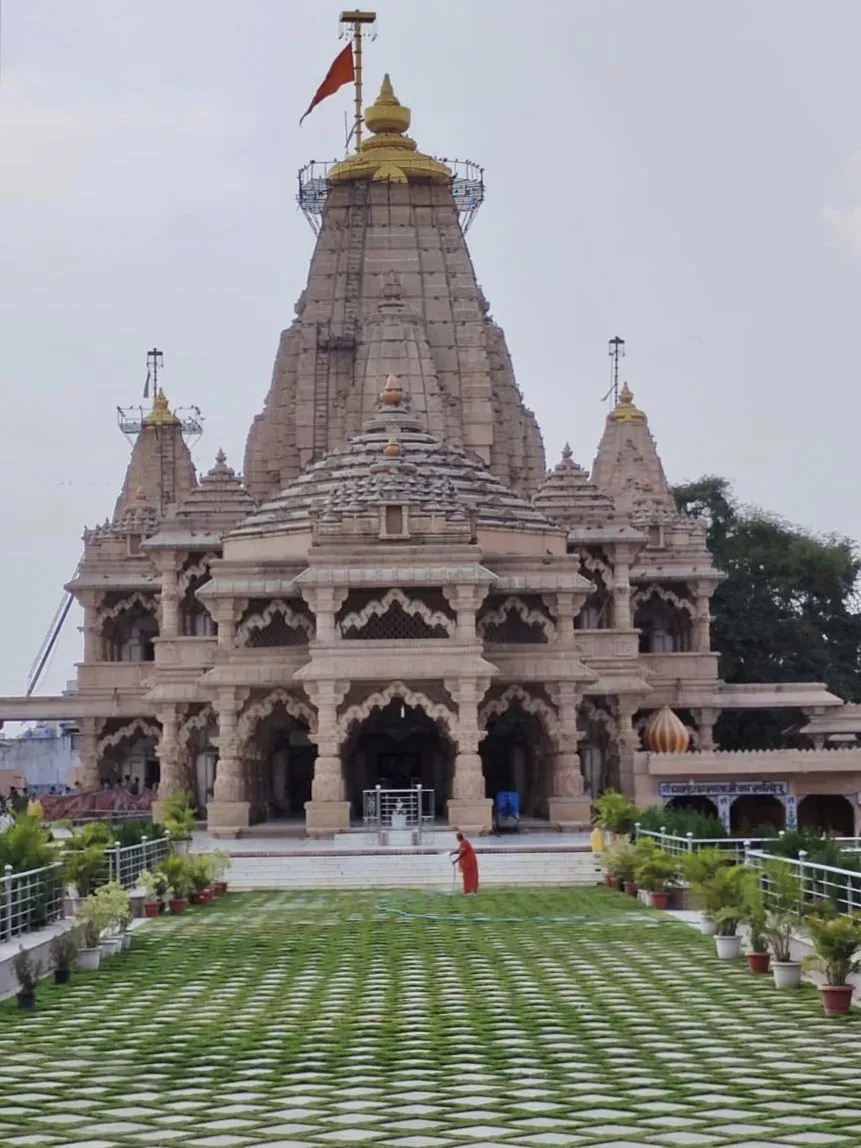
Sanwariya Seth, also called Sanwaliya Ji, is the dark-complexioned form of Shri Krishna. His famous temple is in Mandaphia village in Chittorgarh district, Rajasthan, about 40 km from Chittorgarh on the Chittorgarh-Udaipur highway. The place is now known as Shri Sanwaliya Dham. In the sanctum stands a black-stone murti of Krishna playing the flute. Vaishnav devotees count it as a major tirth, second only to Shrinathji at Nathdwara. Large numbers of families come here for darshan from Rajasthan, nearby Madhya Pradesh and far beyond.
The story
A story told in the temple tradition goes like this. Around 1840, a milkman named Bholaram Gurjar dreamt that three murtis of the Lord lay buried at a place called Chhapar, near Bhadsoda-Bagund. The villagers dug there together and found three beautiful murtis of Shri Krishna.
One murti was taken to Mandaphia, the second was installed at Bhadsoda, and the third stayed at Chhapar, where they were found. Temples were built at all three places, and all three are known as Sanwaliya Ji temples. The Mandaphia temple grew into the main dham, and devotees now come to it from far away.
There is also a special custom here. Many farmers and traders think of Sanwariya Seth as a partner in their work and offer a fixed share of their earnings at the temple as thanks. For devotees it is a way of showing closeness and gratitude to the Lord, and they lovingly call him 'Seth'.
The biggest festival is Bhadrapad Shukla Ekadashi, known as Jaljhulni Ekadashi. A three-day fair is held, and on Ekadashi Sanwaliya Ji is carried in a decorated chariot to the village kund for a ceremonial bath.
How they are shown
At Mandaphia, Shri Krishna stands as a black-stone murti playing the flute. 'Sanwaliya' means the dark-complexioned one, pointing to Krishna's shyam colour. The flute stands for love and joy that draw every heart. He is dressed in fine poshak with a crown, a peacock feather and ornaments. The name 'Seth' comes from devotees' closeness; they think of him as the head of their home and work.
How to worship
Makhan-mishri, tulsi leaves, seasonal fruit and milk sweets
After your morning bath, clean the puja place and set up a picture or small murti of flute-playing Krishna. Light a diya and dhoop, and offer flowers and tulsi leaves. Place makhan-mishri or any sweet as bhog. Chant 'Om Shrikrishnaya Namah' 11 or 108 times and sing any Krishna aarti. At the start of the day, tell the Lord about your work and family and thank him for what you have received. Finally share the prasad with everyone.
Their festivals
- Jaljhulni Ekadashi Mela Bhadrapad Shukla Ekadashi (three-day fair and rath yatra)
- Krishna Janmashtami Bhadrapad Krishna Ashtami
- Annakut (Govardhan Puja) Kartik Shukla Pratipada, the day after Diwali
- Holi and Phooldol Utsav Phalgun Purnima and the days after
Temples and tirth
Sources
- bhaktibharat.com/mandir/sanwaliya-ji-mandir
- apnisanskriti.com/sanwariaji-temple-mandaphia-chittorgarh-rajasthan
- iasgyan.in/daily-current-affairs/shree-sanwariya-seth-temple
- aajtak.in/rajasthan/story/sanwaliya-seth-temple-chittorgarh-mp-family-…
- thecsrjournal.in/rajasthan-mewar-unique-offerings-at-sanwariya-seth-te…
- incredibleindia.gov.in/en/festivals-and-events/rajasthan/jaljhulni-eka…