 Karmandir
राणी सती दादी की जय
About
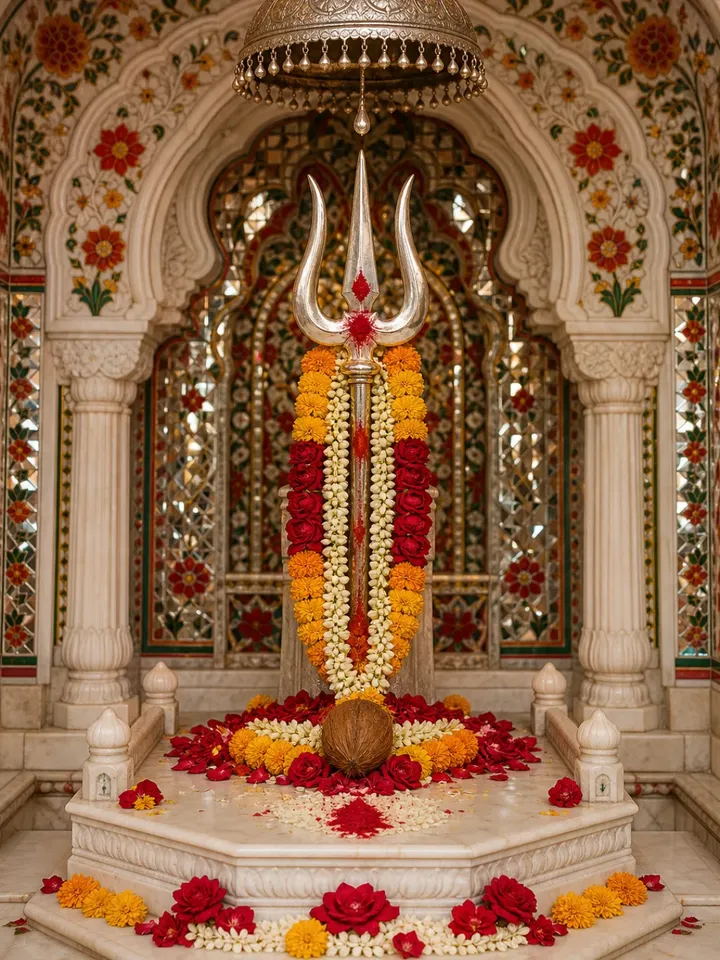
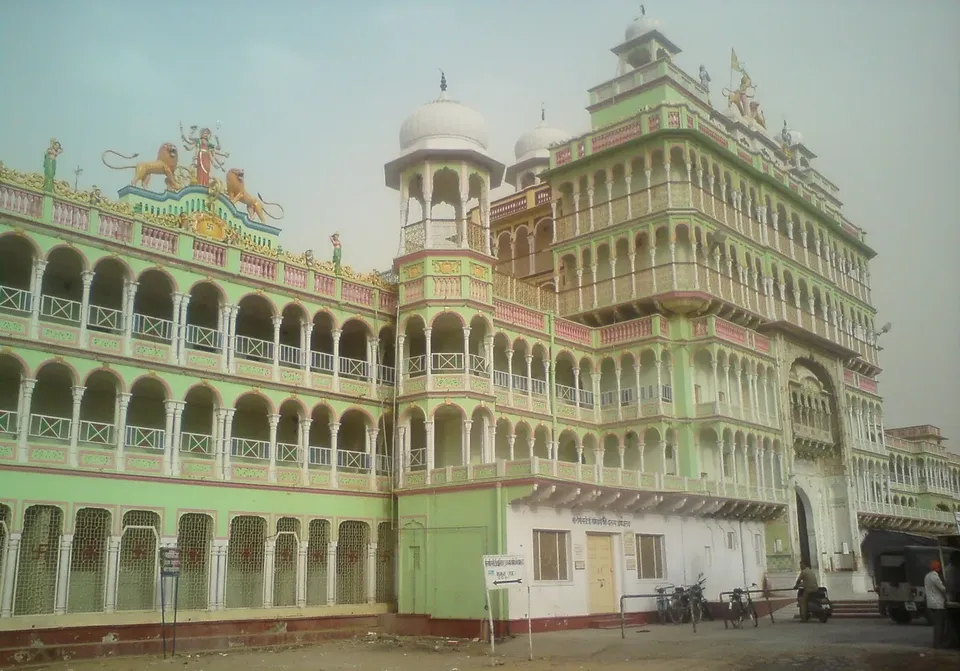
Rani Sati Dadi ji, whose name was Narayani Devi, is revered by her devotees as a form of Shakti, that is, Maa Durga. She is lovingly called 'Dadi ji' (grandmother). Her main shrine is the grand white marble temple at Jhunjhunu in the Shekhawati region of Rajasthan. There is no idol there: a trishul is worshipped as the symbol of Shakti. The temple complex also has shrines of Hanuman ji, Sita ji, Thakur ji, Ganesh ji and Shiv ji. Devotion to Dadi ji is especially strong among Marwari and Agrawal families, and there are temples to her in many Indian cities.
The story
Devotees believe that in an earlier birth Narayani Devi was Uttara, wife of the brave Abhimanyu of the Mahabharata. By Shri Krishna's grace, the story says, Uttara was born again in Kaliyug as Narayani and Abhimanyu as Tandhan Das, and the two were united once more.
Narayani was born in Dokwa village in the home of Gursamal ji. She was married to Tandhan Das ji, son of Jaliram ji of the Jalan family of Hisar. Views on when she lived differ widely, from the 13th to the 17th century.
Tandhan Das ji owned a fine horse that the son of the ruler of Hisar wanted. When he refused to give it away, a quarrel broke out and Tandhan Das ji fell in the fight. The legend says Narayani then showed the courage of Maa Durga, took up arms and defeated the attackers. She blessed Rana ji, the loyal attendant who looked after the horse, saying that devotees would remember him along with her.
In time Jhunjhunu became the centre of her worship. Today devotees honour her as a form of Shakti, Narayani Devi, and as 'Dadi ji', the family goddess of many households.
How they are shown
There is no idol of Dadi ji in the Jhunjhunu temple. In the sanctum a trishul is worshipped as the symbol of Shakti, courage and the protection of dharma. It is decorated with flowers, kumkum and shringar. The white marble walls carry colourful paintings and fine glass mosaic work that tell the temple's story.
How to worship
Coconut (shriphal), sweets and many kinds of dishes; on special days a chhappan bhog (56 dishes).
In your puja place keep a picture of Dadi ji's darbar (the Jhunjhunu temple) or a small trishul as the symbol of Shakti. After bathing, light incense, offer flowers, roli and rice, and offer a coconut or sweets as bhog. Read the Narayani Stuti verse 'Sharanagata dinarta…' 11 times and say 'Rani Sati Dadi ki Jai'. Sing Dadi ji's bhajans with the family, pray for peace at home, and share the prasad at the end.
Temples and tirth
Sources
- en.wikipedia.org/wiki/Rani_Sati_Temple
- en.wikipedia.org/wiki/Rani_Sati
- hi.wikipedia.org/wiki/रानी_सती
- oneindia.com/india/who-is-rani-sati-dadi-maa-and-why-do-people-worship…
- bharatdiscovery.org/india/राणी_सती
- patrika.com/surat-news/zunjhunun-s-grandmother-did-amazing-3386721
- prabhatkhabar.com/state/jharkhand/ranchi/mangsir-badi-navami-festival
- rajras.in/hi/?p=158110
- bhaktibharat.com/chalisa/shri-rani-sati-dadi-ji (read only to confirm…