 Karmandir
आदि शक्ति श्री जीण भवानी की जय
About
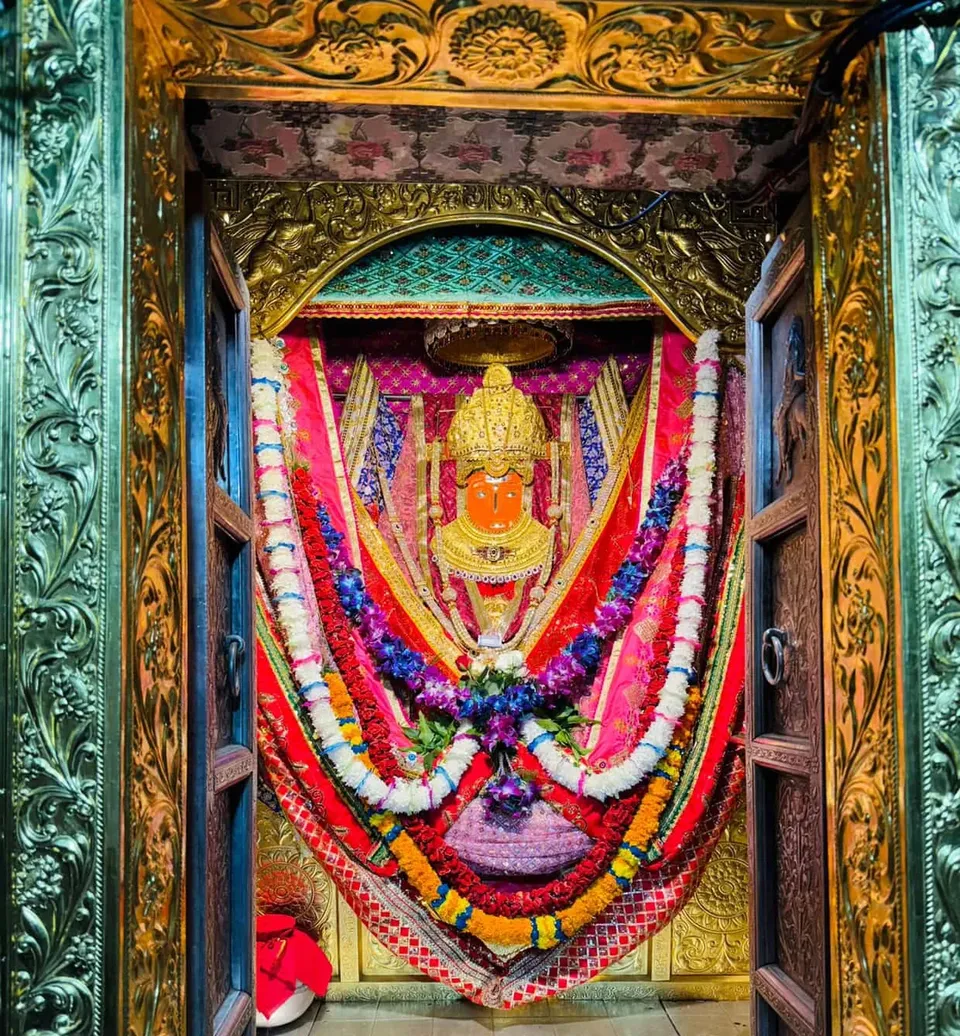
Jeen Mata, also called Jeen Bhawani and Jayanti Mata, is a form of Maa Durga. Her ancient temple stands in the Aravalli hills near Revasa village in Sikar district, Rajasthan. The temple is believed to be about a thousand years old; an inscription on nearby Harsh hill links its building to the time of the Chauhan rulers. On the hilltop above stands the shrine of Harsh Bhairav, revered as her brother. Jeen Mata is the kuldevi of the Chauhans and of many families of Shekhawati. Big melas are held in the Chaitra and Ashwin Navratris.
The story
The folk story says that Jeen, whose childhood name was Jeevan, was born in a Chauhan family of Ghanghu village, in today's Churu district. Her elder brother Harsh loved her dearly, and the two were very close. After Harsh married, Jeen and her bhabhi once went to fetch water and began to argue about whom Harsh loved more. They agreed that the one whose water pot he lifted down first would be the winner. Harsh took his wife's pot first. Jeen was deeply hurt. She left home, went to the Kajal Shikhar in the Aravalli hills and sat there in tapasya, praying to the Mother.
Harsh followed her and begged her to come home, but Jeen did not return. Then Harsh too sat in tapasya on a nearby hill. Devotees believe that, in time, Jeen became one with the Mother's shakti and came to be worshipped as Jeen Mata, while Harsh is worshipped as Harsh Bhairav on the hill above her temple.
Another story is told about the temple's later history. It is said that once an army came to harm the shrine, and swarms of bees drove the soldiers away. Since then the Mother is also lovingly called 'Bhanwaron ki Devi', the goddess of the bees. Her long folk ballad, full of the love and sorrow of a brother and sister, is sung by jogis with damru and sarangi; it is counted among the longest songs of Rajasthani folk literature.
How they are shown
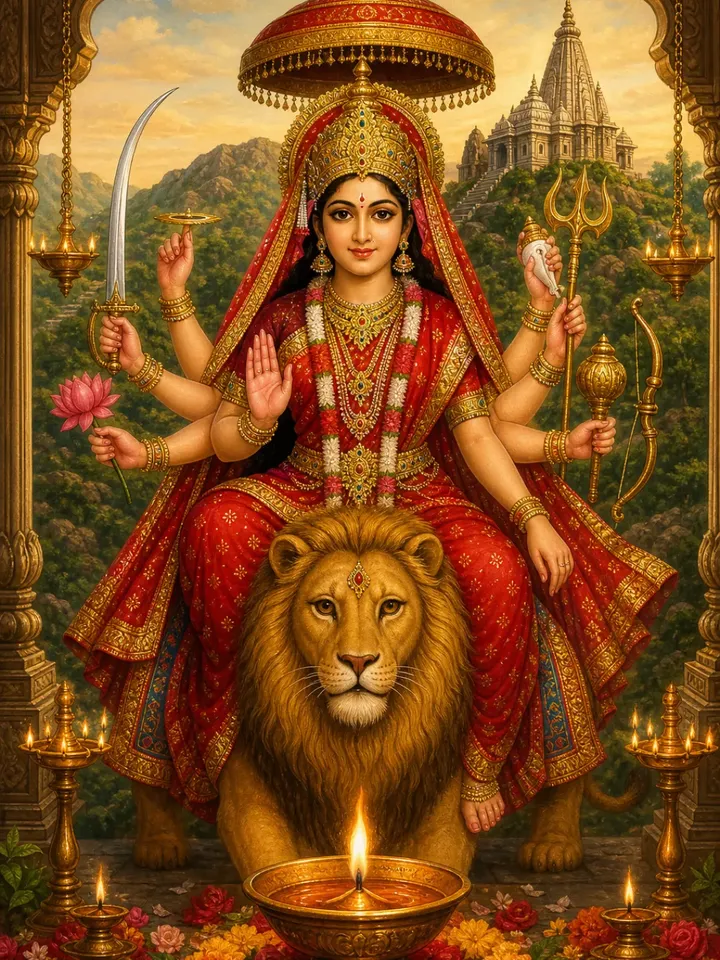
In the temple the Mother is an eight-armed (ashtabhuji) murti, richly dressed in red and gold. Her eight arms show that she protects her devotees from every side. Her aarti describes her riding a lion, a sword in her hand and a royal chhatra above her. An akhand jyoti, an ever-burning lamp, is kept lit before her as a sign of unbroken devotion.
How to worship
Coconuts (lakhs of them are offered during Navratri), red chunri and a sweet bhog.
At home, light a diya before a picture of Jeen Mata, offer a red chunri or red flowers and a coconut, and say 'Jai Shri Jeen Maiya'. If you like, read the verse 'Om Jayanti Mangala Kali', which begins with her other name Jayanti, and sing her aarti. Many families of Shekhawati bring their children to her temple for the jadula (first haircut). At home, share the prasad and remember the love of brother and sister that her story speaks of.
Their festivals
- Chaitra Navratri mela Chaitra Shukla Pratipada to Navami
- Ashwin (Sharad) Navratri mela Ashwin Shukla Pratipada to Navami