 Karmandir
जाहर वीर गोगा जी की जय
About
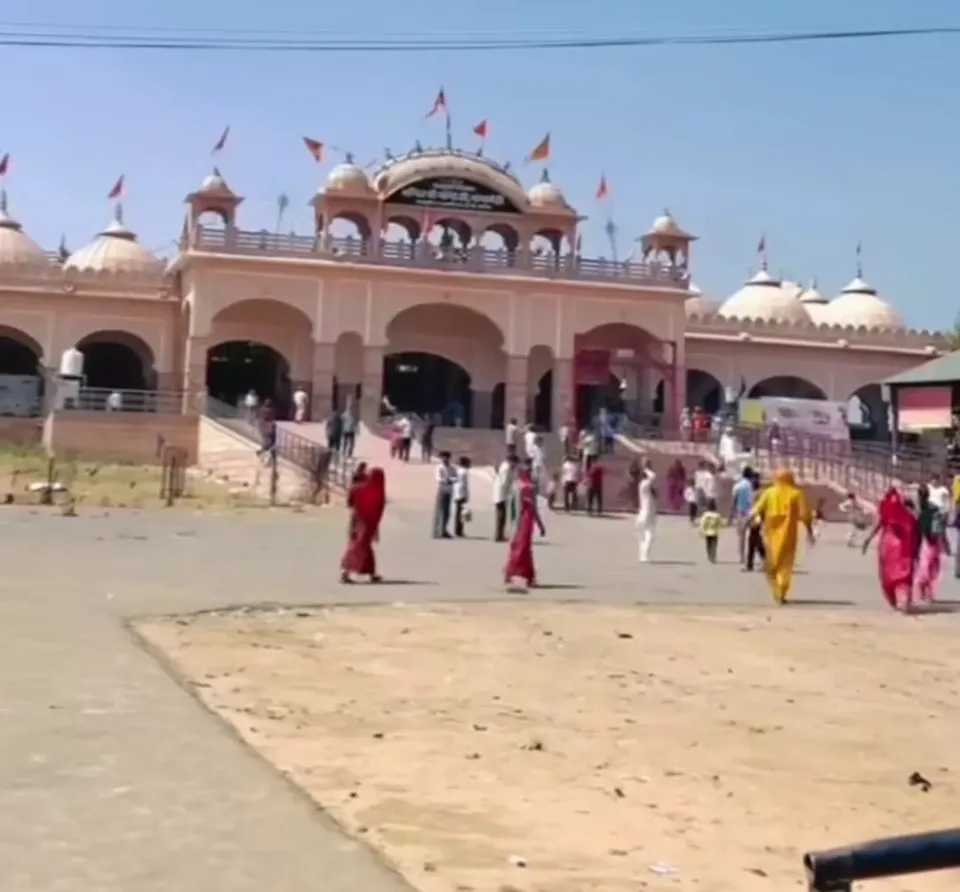
Gogaji is a beloved folk deity of North India, worshipped in Rajasthan, Haryana, Punjab, Himachal Pradesh, Uttar Pradesh and Gujarat. By tradition he was a Chauhan king of Dadrewa in Churu district and a disciple of Guru Gorakhnath. In folk faith he is worshipped as the lord of snakes and a protector of cows. Hindus call him Goga Veer or Jaharveer, and Muslims call him Jahar Pir. His samadhi is at Gogamedi in Hanumangarh district. A Rajasthani saying goes 'gaon-gaon Gogo, gaon-gaon khejdi': almost every village has his shrine (than) under a khejri tree.
The story
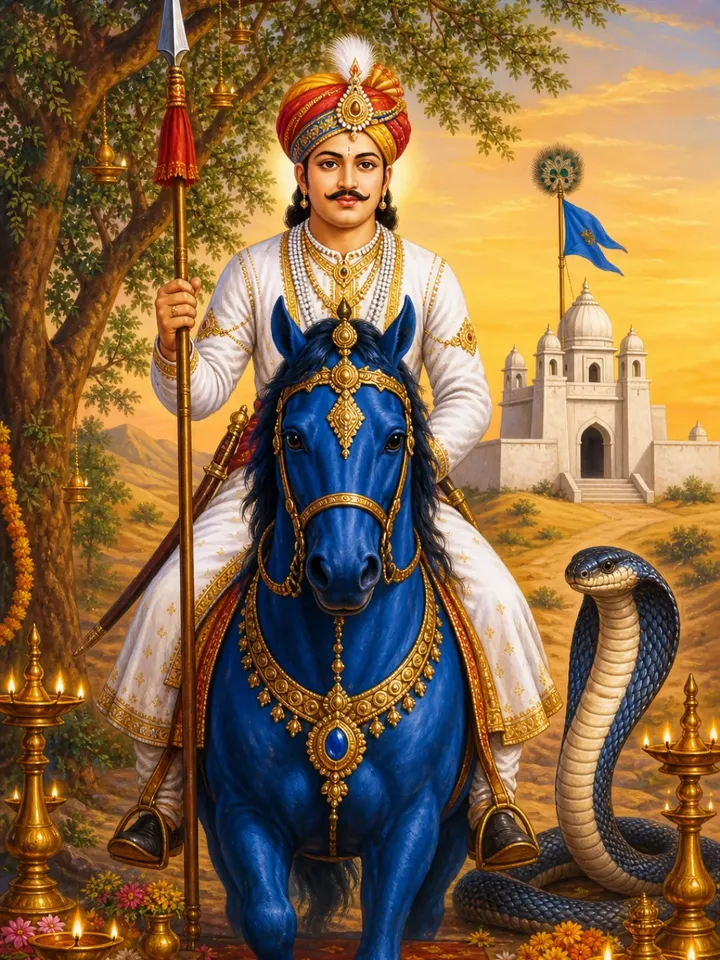
King Jewar Singh Chauhan of Dadrewa and Queen Bachhal had no child for a long time. For years Queen Bachhal served Guru Gorakhnath with devotion. The story says her twin sister Kachhal tricked her way into the first blessing, but later Guru Gorakhnath gave Bachhal 'guggal' as prasad. The queen shared it with others too, even with a blue mare, whose foal grew up to be Gogaji's horse. On Bhadrapad Krishna Navami a son was born, and from 'guggal' he was named Goga.
Goga grew into a brave and just king of the Bagad region, known for protecting cows and people in trouble. Kachhal's sons, his cousins Arjan and Surjan, quarrelled with him over land and cattle, and Goga had to fight them. The rest of the story is told in different ways: in one, his mother was hurt by the fight, so he left the throne and went into the earth at Gogamedi (took samadhi); in another, he fell while protecting the cows. Today both Hindu and Muslim priests serve at Gogamedi, and the place is seen as a symbol of harmony.
How they are shown
Gogaji is shown as a brave king riding a blue horse with a spear in his hand, with the snake (naag) as his sign. At village shrines under khejri trees, a snake is carved on a stone. His standard (nishan) is a bamboo pole with peacock feathers, a coconut, coloured threads and a blue flag. The horse stands for courage, the spear for protection, and the snake for his place as lord of snakes in folk faith.
How to worship
Kheer, churma and gulgule (sweet fried dough balls). On Goga Navami a 'Goga rakhdi' (rakhi) is also offered or tied.
On Goga Navami or any good day, keep a picture or small clay image of Gogaji on his horse. Offer roli, rice, flowers and cloth, and offer kheer, churma or gulgule as bhog. Say 'Jahar Veer Goga Ji ki Jai' and listen to or tell Gogaji's story with the family. Many families tie a rakhi to Gogaji on this day. Share the prasad at the end. If your village has his than, visit it under the khejri tree.
Their festivals
- Goga Navami Bhadrapad Krishna Navami (the day after Janmashtami)
- Gogamedi fair Shravan Purnima to Bhadrapad Purnima; the biggest days are Bhadrapad Krishna Navami and Shukla Navami
- Raksha Bandhan (Goga worship begins in many regions) Shravan Purnima
Temples and tirth
Sources
- en.wikipedia.org/wiki/Gogaji
- hi.wikipedia.org/wiki/गोगाजी
- hi.wikipedia.org/wiki/राजस्थान_के_लोकदेवता
- rajras.in/hi/लोक-देवता-राजस्थान-के-लोक/
- bhaktibharat.com/festival/goga-navami
- bhaktibharat.com/mandir/gogamedi-mandir
- bhagwanam.com/goga-gogaji-navami-vrat-katha-puja-aur-vidhi/
- sahapedia.org/gaogaa-gaathaa-athavaa-gaogaajai-raau-jhaedaau-kae-mauul…
- patrika.com/jaipur-news/gogamedi-fair-start-around-40-lakh-devotees-ex…