 Karmandir
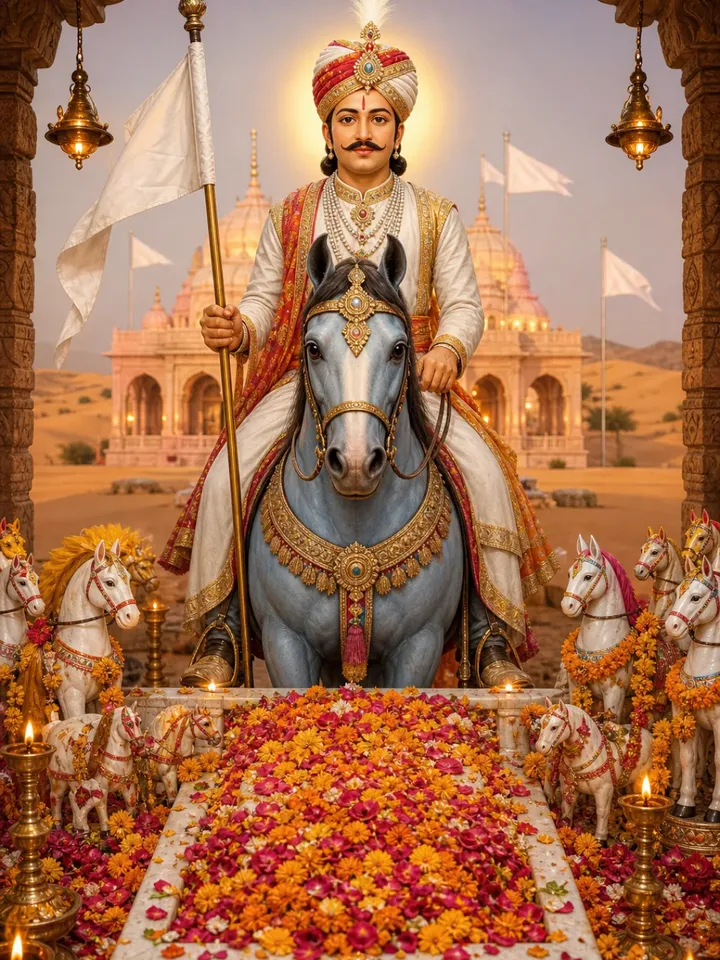
जय बाबा रामदेव
About
Baba Ramdev Ji is a folk deity worshipped widely in Rajasthan and Gujarat. He was a Tanwar Rajput saint of the 14th century (by tradition 1352 to 1385 CE), whom devotees believe to be an avatar of Shri Krishna. He spoke against high-and-low and untouchability and served the poor and the left-out. Many communities, including the Meghwal community, hold him as their chosen deity, and Muslims revere him as 'Ramsa Pir'. His samadhi is at Ramdevra (Runicha) near Pokaran in Jaisalmer district. Please note: he is not the present-day yoga teacher Baba Ramdev, but a folk deity revered for centuries.
The story
Raja Ajmal ji, a Tanwar ruler of the Pokaran area, and Rani Maina De had no child for a long time. Ajmal ji went to Dwarka and prayed to Shri Krishna, and the story says the Lord promised to be born in his home. Two sons were born: the elder Biramdev and the younger Ramdev. Ramdev ji's appearance day is celebrated on Bhadrapad Shukla Dwitiya ('Baba ri Beej').
As a child, Ramdev asked for a toy horse. The craftsman stuffed it with rags instead of good cloth, yet, the story says, little Ramdev sat on it and the horse flew. In memory of this, devotees still offer cloth horses. As a young man he freed the people from the terror of a cruel man named Bhairav.
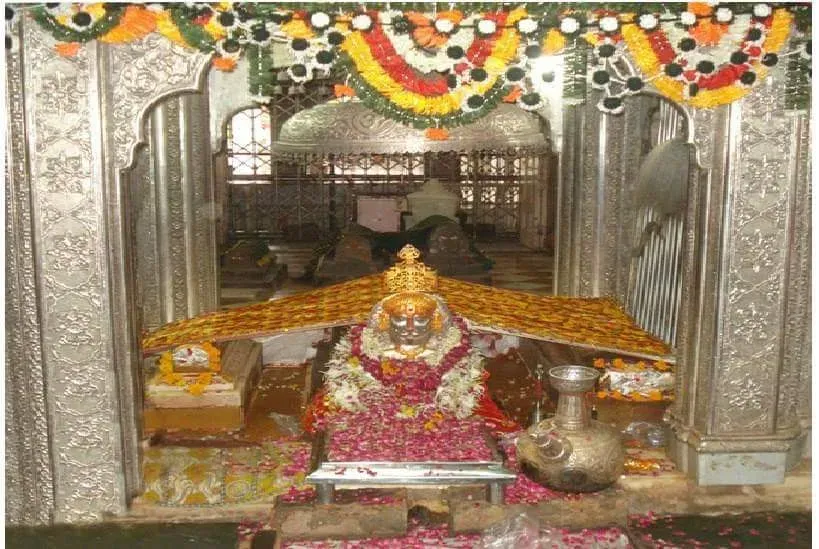
Devotees believe five pirs came from Mecca to test him. At mealtime they said they ate only from their own bowls, which were back in Mecca. Ramdev ji made the bowls appear right there. The pirs called him 'Pir of Pirs' and stayed on near him. He accepted Dali Bai of the Meghwal community as his sister in dharma. On Bhadrapad Shukla Ekadashi, at about 33 years of age, he took jeevit samadhi on the bank of Ram Sarovar at Runicha. The samadhis of Dali Bai and of the five pirs are close by.
How they are shown
Baba Ramdev Ji is usually shown as a prince riding his horse 'Leela', in a Rajasthani turban and angarkha. His flag, the 'neja', is white or five-coloured, and devotees offer it at his temples. At Ramdevra and at his village shrines (devras), his footprints carved in stone, the 'pagalya', are worshipped, and small cloth horses recall his childhood story. Devotees believe Baba comes quickly on his horse when called; the neja is a sign of his teaching that all people are equal.
How to worship
Churma and sweets made with ghee. Devotees also offer a cloth horse and a flag (neja).
Keep a picture of Baba Ramdev Ji or his pagalya at home. Light incense and a lamp, offer flowers, and offer churma or sweets as bhog. Sing the aarti 'Pichham dharan soon' and say 'Jai Baba Ramdev'. On Bhadrapad Shukla Dwitiya (Baba ri Beej) and Ekadashi many families hold a 'jamma', a night of bhajans. Remember Baba's teaching: treat everyone as equal and help those in need.
Their festivals
- Baba Ramdev Jayanti (Baba ri Beej) Bhadrapad Shukla Dwitiya
- Ramdevra Bhadva fair Bhadrapad Shukla Dwitiya to Ekadashi
- Baba Ramdev Samadhi day Bhadrapad Shukla Ekadashi
Aarti, chalisa and katha
Temples and tirth
Sources
- en.wikipedia.org/wiki/Ramdev_Pir
- hi.wikipedia.org/wiki/रामदेव_पीर
- rajras.in/hi/लोक-देवता-राजस्थान-के-लोक/
- festivalsofindia.in/baba-ramdev-jayanti
- shubhpanchang.com/hi/sages-and-saints/gurus-and-saints/ramdevpiraji
- zeenews.india.com/hindi/india/rajasthan/jodhpur/rajasthan-news-ramdevr…
- patrika.com/jaisalmer-news/crowd-in-ramdevra-temple-3341238
- patrika.com/hubli-channel2/cyclists-heading-to-ramdevra-welcomed-in-hu…