 Karmandir
बोलो बाबा मोहन राम की जय
About
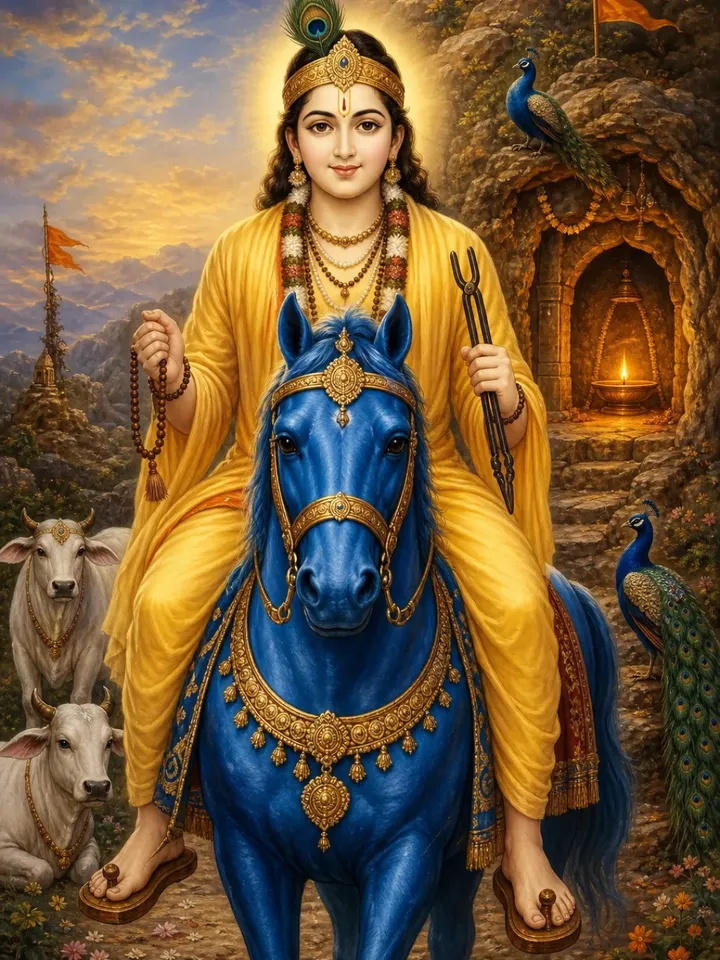
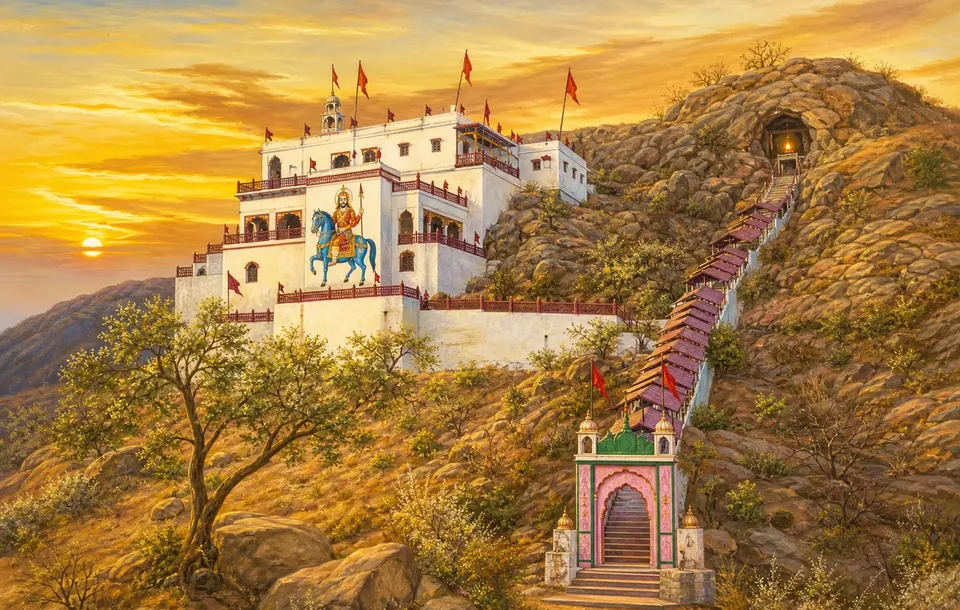
Baba Mohan Ram is a folk deity of the Bhiwadi area of Rajasthan, whom devotees regard as a form of Shri Krishna in Kali Yuga. His main shrines are Milakpur village near Bhiwadi and the hill of Kali Kholi. In the Kali Kholi cave Baba's akhand jyot (ever-burning lamp) is kept alight, and the Milakpur temple also worships an akhand jyot. Devotees come from Haryana, Rajasthan, Uttar Pradesh and Delhi, especially on the Dooj (second lunar day) of every month. Very large fairs are held on the Dooj after Holi and after Raksha Bandhan. Devotees lovingly call him 'Kholi wale Baba' and 'Neele Ghode wale', the one on the blue horse.
The story
By tradition, about three hundred and fifty years ago a Brahmin named Nandu lived in Milakpur village. He grazed cows on the hills and was a true devotee of Shri Krishna. The story says a cow came every day to graze with his herd, but each evening it walked off towards the hill. One day Nandu followed it. The cow went into a cave on the hill. Inside, Nandu saw a radiant sadhu doing tapasya beside a dhuni fire, and he bowed to him.
The sadhu called Nandu by his name and said that he was Mohan Ram. Devotees believe it was Shri Krishna himself who appeared in this form. Baba asked Nandu to ask for a boon, but Nandu said that all he wanted was devotion to Baba. Pleased, Baba accepted him as his dear devotee and gave him the work of lighting Baba's jyot and serving people.
After this, Nandu lit a jyot at Kali Kholi, at the very spot where Baba had appeared. He built a hut on the bank of the johad (village pond) at Milakpur and began his worship there, and an akhand jyot was lit there too. Devotees believe this jyot has burned ever since. Generations of Nandu Bhagat's family still serve Baba. Devotees take darshan at both the Milakpur temple and the Kali Kholi cave.
How they are shown
In pictures Baba Mohan Ram rides a blue horse, which is why devotees call him 'Neele Ghode wale'. He wears a gold crown with a peacock feather in front, which links him with Shri Krishna. He is simply dressed, with a garland of rudraksha (and pearls). In the Kali Kholi cave there is no murti; devotees take darshan of the akhand jyot, which they see as the sign of Baba's presence.
How to worship
Dooj (Dwitiya, the second lunar day) of every month
Pure ghee for the akhand jyot, uple (cow-dung cakes) for the dhuni, and batashe or sweets as prasad.
Keep a picture of Baba Mohan Ram in a clean place and light a lamp of pure ghee, because the jyot is at the heart of his worship. Offer flowers, offer batashe or sweets as bhog, and say 'Bolo Baba Mohan Ram ki Jai'. On Dooj many families sing bhajans together. Seva is held dear in Baba's worship, so keep grain and water for birds and give fodder to cows. Always use pure ghee for the jyot.
Their festivals
- Holi Dooj fair (Lakkhi Mela) Chaitra Krishna Dwitiya, the day after Dhulandi (the fair runs about three days)
- Raksha Bandhan Dooj fair Bhadrapad Krishna Dwitiya, the Dooj after Raksha Bandhan
- Monthly Dooj darshan The Dooj (Dwitiya) of every month
Temples and tirth
Sources
- en.wikipedia.org/wiki/Baba_Mohan_Ram
- hi.wikipedia.org/wiki/बाबा_मोहन_राम
- bhaskar.com/rajasthan/bhiwadi/news/RAJ-OTH-MAT-latest-bhiwadi-news-023…
- bhaskar.com/rajasthan/bhiwadi/news/rajasthan-news-baba-mohanram-will-c…
- bhaskar.com/rajasthan/bhiwadi/news/latest-bhiwadi-news-023100-2513582.…
- patrika.com/bhiwadi-news/a-confluence-of-faith-devotion-and-reverence-…
- morningnewsindia.com/uncategorized/news/baba-mohan-ram-ke-bhajan-aarti…
- mohanrambaba.com/
- mohanrambaba.com/कथाएं/
- mohanrambaba.blogspot.com/2018/02/blog-post.html
- kholidham.blogspot.com/2014
- hindu-blog.com/2011/08/baba-mohan-ram-temple-shravan-festival.html